This Page is Home SustainabilitySocialRespect for Human Rights
Respect for Human Rights

As a signatory company of the UN Global Compact (UNGC), POC upholds the Ten Principles in the four areas of human rights, labour, environment, and anti-corruption; supports and respects international human rights norms such as the International Bill of Human Rights and the ILO Declaration on Fundamental Principles and Rights at Work; and undertakes initiatives to promote respect for human rights in line with the framework of the UN Guiding Principles on Business and Human Rights.
Human Rights Policy
To fulfill our corporate responsibility to respect human rights, we have established the "Penta-Ocean Construction Group Human Rights Policy" and we are practicing corporate activities based on this policy. This policy was drafted after consultation with external experts and issued by a resolution of the Board of Directors dated June 27, 2023.
Penta-Ocean Construction Group Human Rights Policy is available here
Promotion System
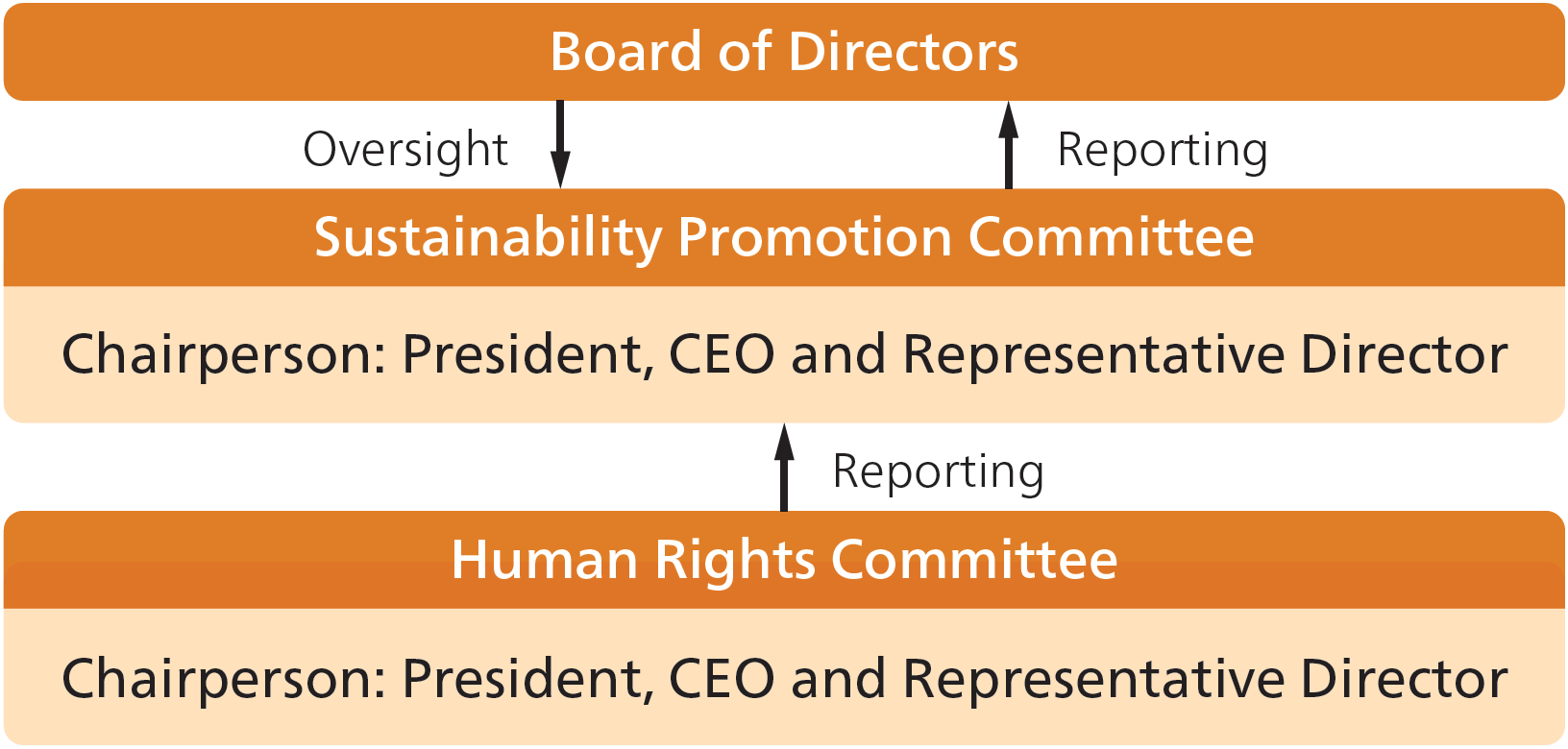
In May 2023, we established the Human Rights Committee, chaired by the President, CEO and Representative Director (Secretariat: The Sustainability Promotion Office). We are promoting human rights due diligence, including the formulation of our group's human rights policy, identification of significant human rights risks through regular human rights impact evaluation, and monitoring the effectiveness of remedial and corrective measures. Important matters are reported to the Board of Directors.
Education and Awareness
We conduct human rights training globally for all executives and employees of the Group, and we also hold a "Human Rights Awareness Trainings for executives" for executives and management-level employees, both on an annual basis. In February 2025, we held a panel discussion led by an external speaker on the theme of diversity. In February 2026, we held a lecture by an external speaker on the theme of "Practicsing Human Rights Due Diligence in the Construction Industry." Additionally, we strive to broadly enhance understanding of human rights by soliciting human rights awareness slogans from employees and their families, and by creating human rights posters and leaflets. We also provide our major business partners with clear explanations of our specific initiatives regarding respect for human rights when presenting the Sustainable Supply Chain Guidelines.
Establishment of the Human Rights Consultation Desk and Harassment Consultation Desk
To enable early detection and correction of negative impact on human rights, we have established the Human Rights Consultation Desk and Harassment Consultation Desk that are available to all individuals affected by our Group's corporate activities. In addition to internal contact points, we have established external contact points (law firms), allowing for anonymous consultations and ensuring that those seeking advice are not subject to any disadvantageous treatment. We conduct training and education for managers on handling reports and actual cases. The total number of consultations received at both contact points (domestic and overseas) in FY 3/26 was 37 (harassment consultations: 37, human rights consultations: 0)*.
There were no significant human rights violations.
* Each consultation is counted under the relevant consultation desk based on its content
Human Rights Consultation Desk and Harassment Consultation Desk
Dialogue with Stakeholders
To ensure the effectiveness of our business and human rights initiatives, in March 2024, we held an opinion exchange with experts from the Japan Platform for Migrant Workers towards Responsible and Inclusive Society (JP-MIRAI) regarding the human rights of foreign workers. Since June 2024, we have participated in the Business and Human Rights Academy, organised by the UNDP (United Nations Development Programmee), deepening our understanding of business and human rights issues through lectures by human rights experts and discussions with other participating companies, and applying these insights to improve our own initiatives.
In the Global Compact Network Japan (GCNJ), of which we have been a member since 2022, we participate in the Human Rights Due Diligence Working Group, obtaining information from experts and others to promote our initiatives.
Human Rights Due Diligence (DD)
We implement human rights due diligence based on the UN Guiding Principles on Business and Human Rights.
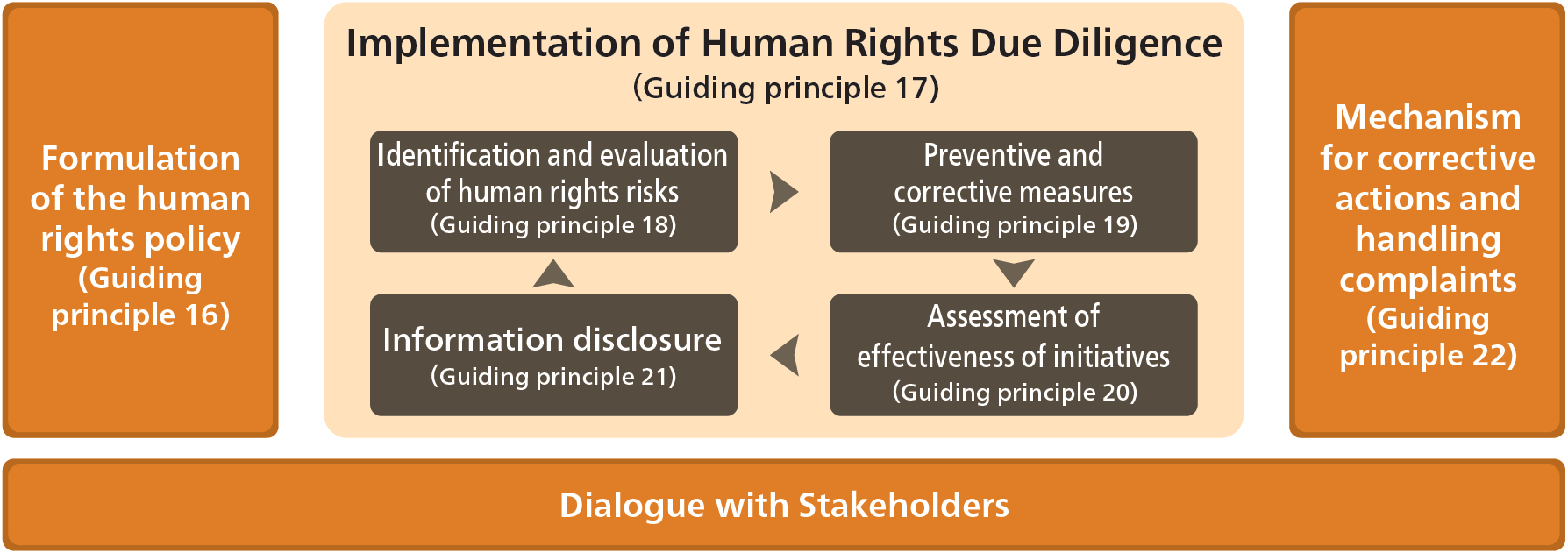
We conduct monitoring based on the human rights risks and priority issues in the construction industry that we identified in FY 3/23 with guidance from external experts.
Responsible departments, such as those in charge of safety, human resources, and general affairs, monitor the implementation status of specific measures and report regularly to the Human Rights Committee. In FY 3/26, we conducted human rights monitoring covering our 10 domestic branches, nine Group companies, and overseas offices in seven countries and regions. After explaining human rights issues to each of these sites, we asked them to conduct self-checks and confirmed the results. For major subcontractors and material suppliers, we also conducted human rights monitoring in FY 3/26 covering 1,075 companies (in Japan and overseas) as part of the self-assessment questionnaire (SAQ) based on the Sustainable Supply Chain Policy and Guidelines. We take action on items requiring improvement and report the results to the Human Rights Committee.
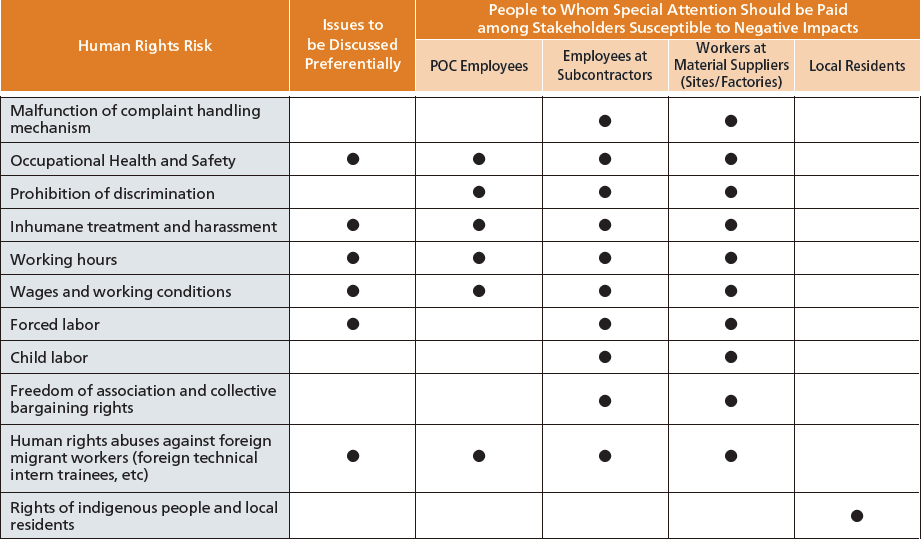
Main Human Rights Risks
| Human Rights Risks | Issues to be Discussed Preferentially | People ti Whom Special Attention Should be Paid among Stakeholders Susceptible to Negative Impacts |
|||
|---|---|---|---|---|---|
| POC Employees | Employees at Subcontractors | Workers ato Material Suppliers (Sites/Factories) |
Local Residents | ||
| Malfuction of complaint handling mechanism | ● | ● | |||
| Occupational Health and Safety | ● | ● | ● | ● | |
| Prohibition of discrimination | ● | ● | ● | ||
| Inhumane treatment and harassment | ● | ● | ● | ● | |
| Working hours | ● | ● | ● | ● | |
| Wages and working conditions | ● | ● | ● | ● | |
| Forced labour | ● | ● | ● | ||
| Child labour | ● | ● | |||
| Freedom of association and collective bargaining rights | ● | ● | |||
| Humanrights abuses against foreign migrant workers (foreign technical intern trainees, etc) | ● | ● | ● | ● | |
| Rights of indigenous people and local residents | ● | ||||
Main Initiatives
[FY 3/23] Identifying Human Rights Risks in the Construction Industry
- Based on reports issued from international organisations, industry groups, NGOs, etc. and cases of human rights abuses, we identified human rights risks in the construction industry
- We performed mapping of stakeholders on the value chain that are susceptible to each anticipated risk
[FY 3/24] Determining the State of Human Rights Risk Control in Penta-Ocean Construction Group
- We held internal dialogue meetings to promote the understanding of identified human rights risks among relevant parties. Additionally, we conducted hearing and monitoring surveys for our branch offices, overseas offices and companies of the Group to confirm "presence or absence of rules", "grasping the current state", etc
- The Human Rights Committee deliberates on how to implement preventive and corrective measures that should be prioritised, and continues to monitor their progress
[FY 3/25] Implementation of Measures Based on the Results of Human Rights Monitoring Surveys, and Extending Initiatives for Respecting Human Rights to Subcontractors
- Implementation of specific measures by responsible departments such as safety and human resources departments, and extension of these measures to include group companies
- Overseas, with input from experts, we created checklists based on human rights-related laws and social norms in each country
- Conducted monitoring surveys targeting major subcontractors and others (Monitoring using the self-assessment questionnaire (SAQ) based on the Sustainable Supply Chain Policy and Guidelines)
[FY 3/26] Continued Implementation of Human Rights Due Diligence
- Implementation of human rights monitoring in Japan and overseas
- The monitoring covered ten domestic branches (September-December 2025), nine Group companies (November 2025-January 2026), and overseas offices across seven countries and regions. Following briefing sessions on human rights issues, these entities conducted self-assessments.
- Conducted monitoring of 1,075 major domestic and overseas subcontractors and material suppliers using a Self-Assessment Questionnaire (SAQ) based on the Sustainable Supply Chain Policy and Guidelines (July 2025 -).