This Page is Home SustainabilitySocialOccupational Health and Safety
Occupational Health and Safety

As a signatory company of the UN Global Compact (UNGC), POC upholds the Ten Principles in the four areas of human rights, labour, environment, and anti-corruption, and recognise occupational health and safety initiatives as the foundation of our sustainability management, and carry out occupational accident prevention activities in collaboration with subcontractors.
Principle of Health and Safety Activity
- Make every effort to avoid all accidents, including occupational and public accidents.
- Prevent occupational diseases, infectious diseases, and personal injuries and illnesses, promote mental and physical health, and create a comfortable and reassuring working environment.
- Build an open workplace culture, conduct safety and health activities where staff and business partners are united, and continuously raise the standards.
Click here to view the Safety, Health, Quality, and Environmental Policy
Promotion Structure
Environment Health and Safety Committee
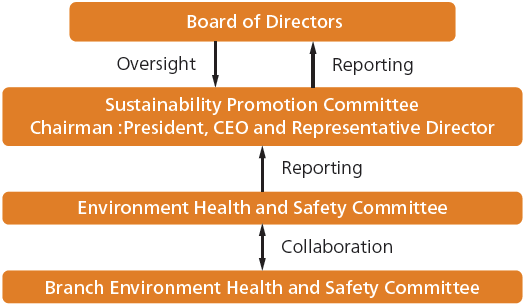
To effectively promote environment, health, and safety activities, the Environment Health and Safety Committee is established as the central organisation under the Sustainability Promotion Committee chaired by the President, CEO and Representative Director. The committee is chaired by the Managing Executive Officer and Head of the Safety, Quality and Environment Management Divisions Group. Its members include the Senior Executive General Managers and Head of the relevant Divisions Group, as well as labour union representatives (employee representatives).
Furthermore, based on the annual plan, the Environment Health and Safety Committee conducts regular on-site patrols across all branches.
Occupational Health and Safety Management System (COHSMS)
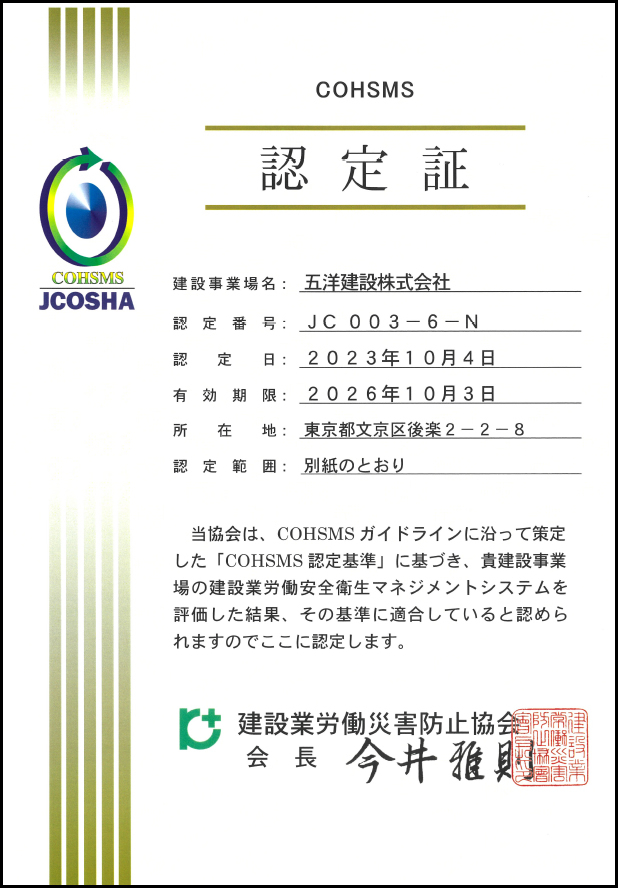
Our commitment to construction safety stems from basic respect for humanity. In order to eliminate or reduce potential disaster factors inherent in our business, promote health promotion and the creation of comfortable workplaces for workers, and improve the company's safety and health standards, we have established an occupational health and safety management system. We were one of the first in the construction industry to obtain COHSMS*1 Certification from the Japan Construction Occupational Safety and Health Association (JCOSHA) in 2008, and have renewed it following an audit every three years since.
Following the revision of the COHSMS Guidelines to "NEW COHSMS" by the Japan Construction Occupational Safety and Health Association in April 2018, we revised at our end our management system by including the addition of mental health initiatives. While adhering to the standards in the above certification, we will aim at further enhancement of the system and co-work with our subcontractors to ensure its implementation and operation. By improving the level of safety and health management, we will strive to take preventive measures to avoid occupational accidents.
Several of our overseas offices have acquired the international standard for occupational health and safety management systems (ISO 45001), and we are working to continuously improve our occupational health and safety performance through the operation of the system.
* COHSMS: Construction Occupational Health and Safety Management System
Accreditation and Certifications of Management Systems
| Scope of COHSMS accreditation | : POC Headquarters and all ten domestic branches, the Institute of Technology |
| ISO 450001 certification scope | : International Business Unit Headquarters in Singapore, Hong Kong Branch Office, Indonesia Branch Office (acquisition rate: 50%) |
For a list of our ISO and other certifications, click here
Safety Results
Penta-Ocean Construction total (Domestic and Overseas) (4 or more days lost)
(non-consolidated)
| FY 3/22 | FY 3/23 | FY 3/24 | FY 3/25 | FY 3/26 | |
|---|---|---|---|---|---|
| Number of accidents | 18 | 35 | 24 | 31 | 25 |
| Number of fatal accidents | 3 | 1 | 1 | 2 | 2 |
| Number of fatalities (employee) |
0 | 0 | 0 | 0 | 1 |
| Number of fatalities (subcontractors) |
3 | 1 | 1 | 2 | 1 |
| Frequency rate*2 | 0.34 | 0.69 | 0.48 | 0.60 | 0.48 |
| Severity rate*3 | 0.45 | 0.20 | 0.17 | 0.31 | 0.31 |
| Total working hours (million hours) |
52.20 | 50.98 | 53.79 | 53.25 | 52.34 |
Domestic (4 or more days lost)
(non-consolidated)
| FY 3/22 | FY 3/23 | FY 3/24 | FY 3/25 | FY 3/26 | |
|---|---|---|---|---|---|
| Number of accidents | 9 | 23 | 17 | 22 | 18 |
| Number of fatal accidents | 1 | 1 | 0 | 0 | 0 |
| Number of fatalities (employee) |
0 | 0 | 0 | 0 | 0 |
| Number of fatalities (subcontractors) |
1 | 1 | 0 | 0 | 0 |
| Frequency rate*2 | 0.47 | 1.30 | 0.97 | 1.00 | 0.81 |
| Severity rate*3 | 0.42 | 0.52 | 0.06 | 0.07 | 0.03 |
| Total working hours (million hours) |
19.21 | 17.70 | 19.62 | 22.05 | 22.28 |
Overseas (4 or more days lost)
(non-consolidated)
| FY 3/22 | FY 3/23 | FY 3/24 | FY 3/25 | FY 3/26 | |
|---|---|---|---|---|---|
| Number of accidents | 9 | 12 | 7 | 9 | 7 |
| Number of fatal accidents | 2 | 0 | 1 | 2 | 2 |
| Number of fatalities (employee) |
0 | 0 | 0 | 0 | 1 |
| Number of fatalities (subcontractors) |
2 | 0 | 1 | 2 | 1 |
| Frequency rate*2 | 0.30 | 0.36 | 0.20 | 0.32 | 0.23 |
| Severity rate*3 | 0.46 | 0.01 | 0.22 | 0.48 | 0.51 |
| Total working hours (million hours) |
33.00 | 33.28 | 34.17 | 31.21 | 30.06 |
All numbers are non-consolidated figures (POC only)
*2 Frequency rate: Represents the frequency of accidents, expressed as the number of casualties from occupational accidents per one million total actual working hours.
The average frequency rate for the domestic general construction in FY 3/26 was 0.69 (Source: Ministry of Health, Labour and Welfare survey)
*3 Severity rate: Represents the severity of accidents, expressed as the number of workdays lost per 1,000 total actual working hours.
The average severity rate for the domestic general construction in FY 3/26 was 0.12 (Source: Ministry of Health, Labour and Welfare survey)
Risk Assessment
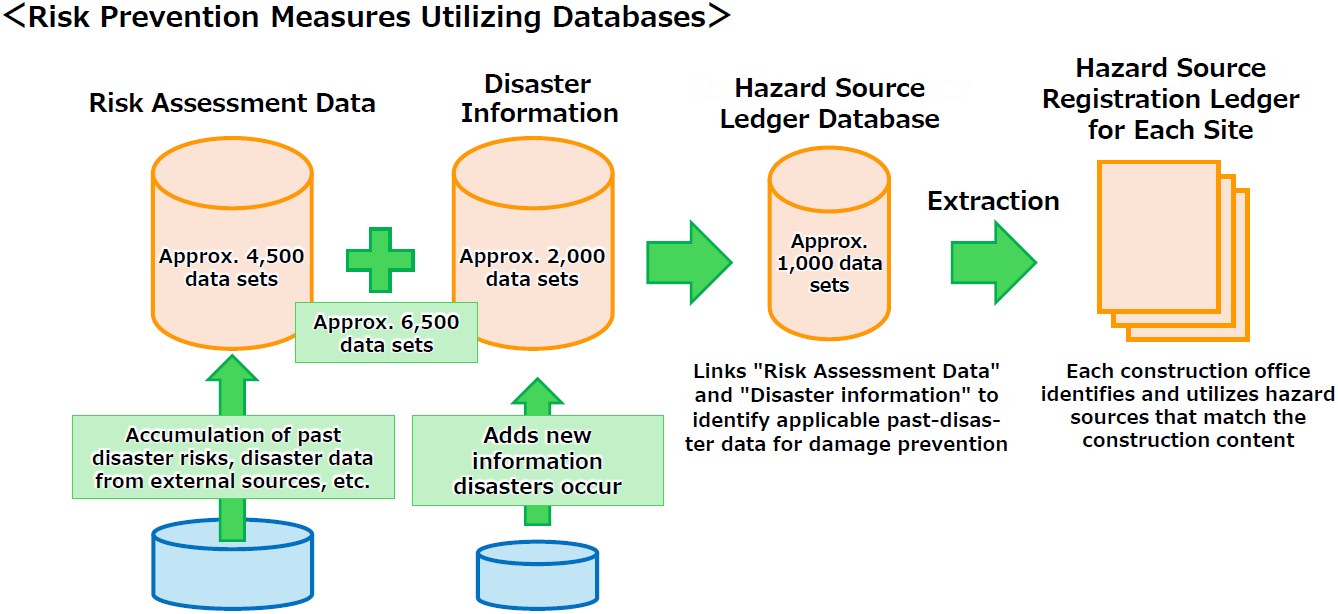
Based on approximately 6,500 data items created from risk assessment data and accident information, we have identified and registered about 1,000 high-risk hazards in a database, which is used for risk assessment. In all of our site offices, we use this database to identify risk factors, which are then shared with subcontractors, in each phase of work and during the project planning. The risk factors identified through above risk assessment are linked to disaster information, and situational photos and maps from actual disaster records are used to determine risk reduction measures. Thus, we are working together with our subcontractors on disaster prevention measures to avoid the same disaster scenarios.
On-site Initiatives for Putting Safety First
Education & Awareness
To enhance knowledge and skills related to workplace safety and to work toward eliminating occupational and public accidents, we provide systematic, rank-based training for all employees from the time they join the Company, as well as ongoing education such as regular training sessions for general safety and health managers.
Global Implementation of POC Standards
We have been implementing occupational accident prevention and quality management measures that prioritise safety and quality in Japan, and named it the Penta-Ocean Construction Standards. We spread these standards not only in Japan but also overseas and carry out occupational accident prevention activities in collaboration with subcontractors.
<Examples of Initiatives>
- Establishment of Special Safety Day (March 30), Fire Prevention Day (April 20)
- General Safety Meeting (1st day of every month), Safety Week (preparation period: June 1-30, period held: July 1-7)
- Implementation of Penta-Ocean Construction self-regulation and accident prevention activities (Exercise 333, etc.)
Designating a Special Day to Pledge Safety
Special Safety Day (March 30)
On March 30, 2014, a major accident occurred in the Okinotorishima port construction site, taking precious lives of seven people. Every year on March 30, a memorial service is held with the attendance of the bereaved families and clients. In addition, to keep this disaster in mind, March 30 is designated as "Special Safety Day," when simultaneous onsite inspections are conducted to reconfirm safety.
Fire Prevention Day (April 20)
On April 20, 1998, a major fire occurred at our construction site, with one deceased, 16 people mildly/seriously injured, and one building completely burned down. Taking this accident as a lesson, we designated April 20 as Fire Prevention Day to reconfirm fire prevention measures.
Safety Considerations for International Workers
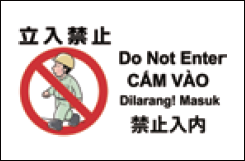
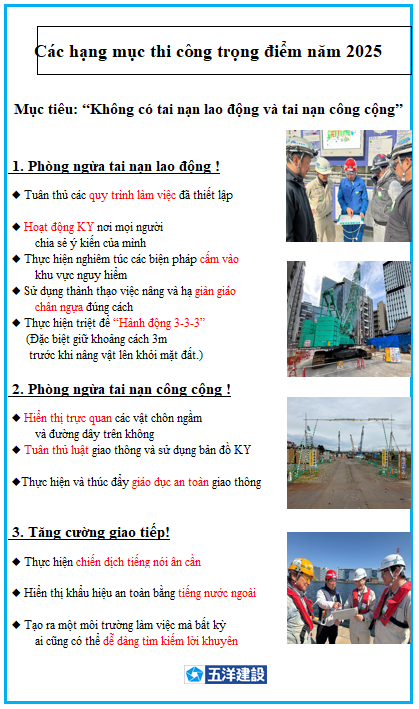
The proportion of international workers has been increasing year by year, and they account for about 10% of on-site personnel at our domestic sites. As part of our safety measures for non-Japanese personnel, we prepare safety signage, key construction items, and orientation/training materials in their native languages (such as Vietnamese, Indonesian, English, and Chinese), and provide training accordingly.
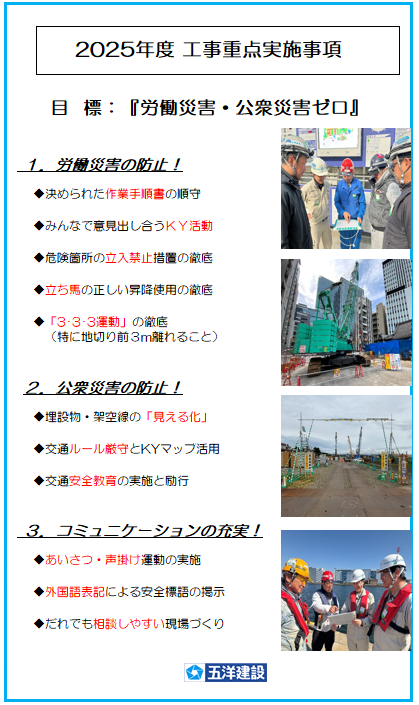
key construction rules
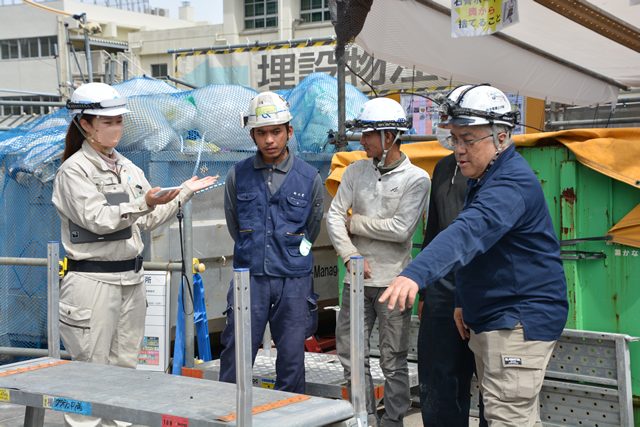
We have also introduced an AI translation tool company-wide.
It is used in safety training and other settings to enhance communication with international workers.
At some sites, safety patrols led by international workers are conducted on a weekly basis. Through these measures, we aim to reduce occupational accidents and improve on-site productivity by overcoming language barriers.
Initiatives to Prevent "Specific Accidents"
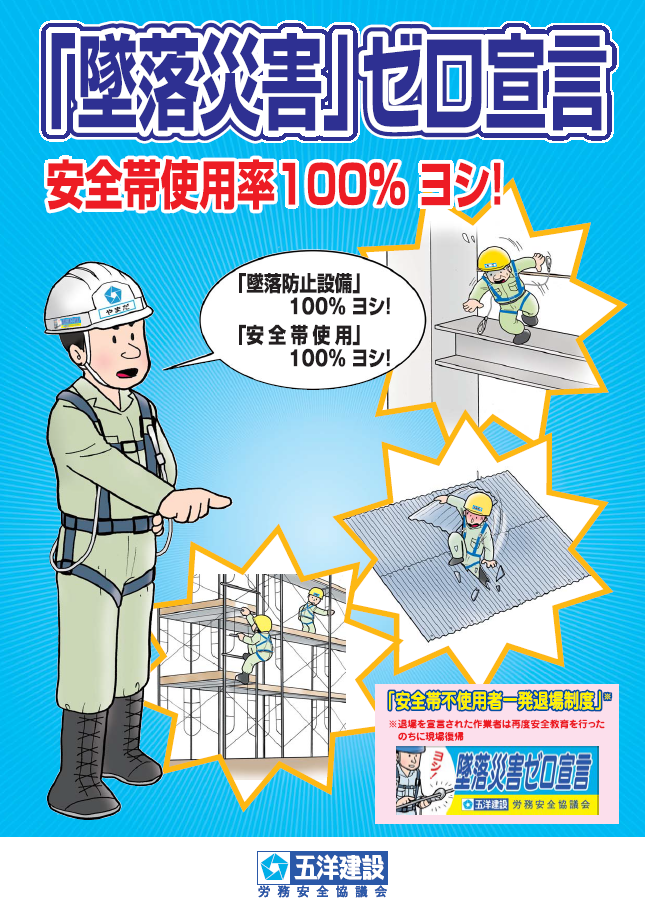
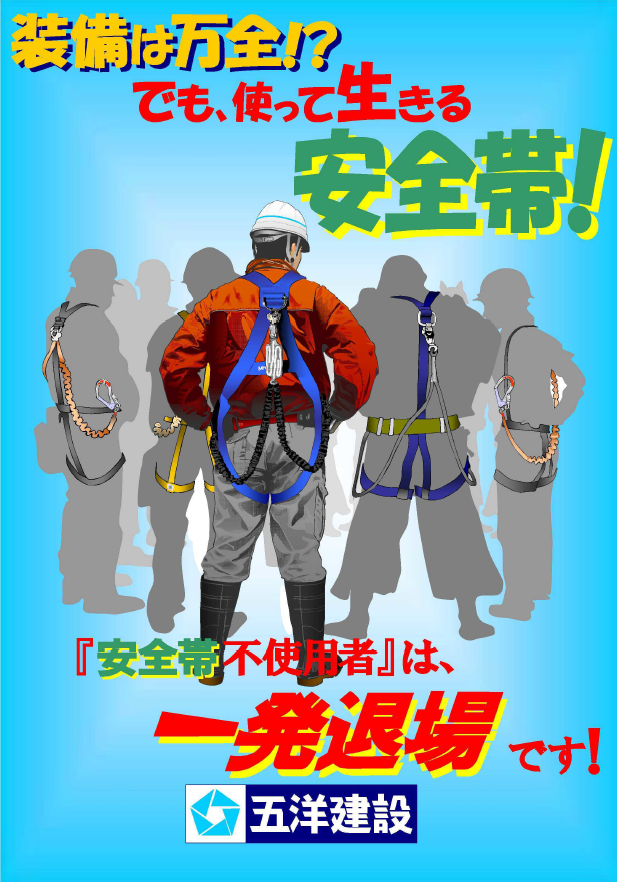
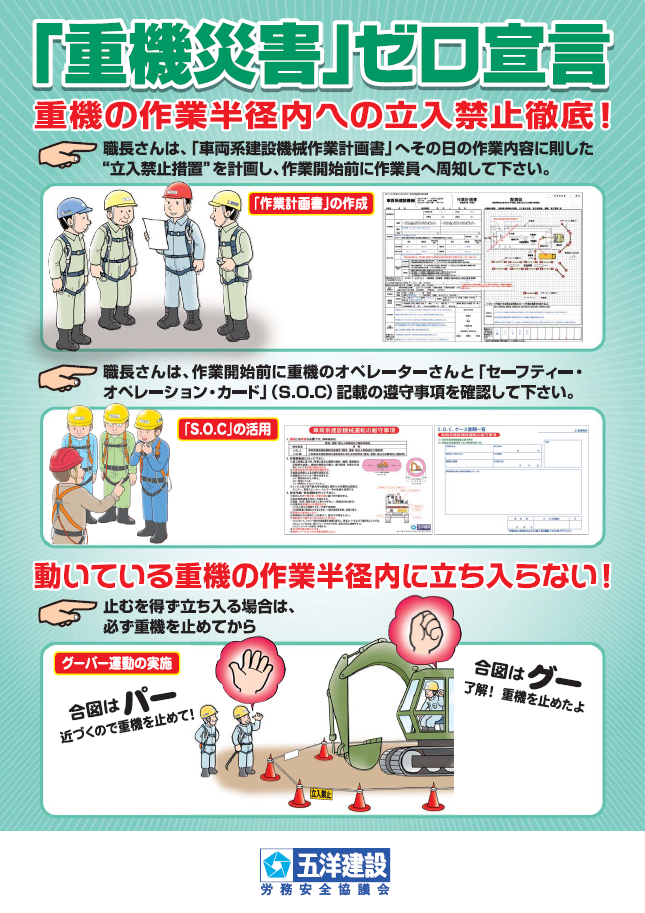
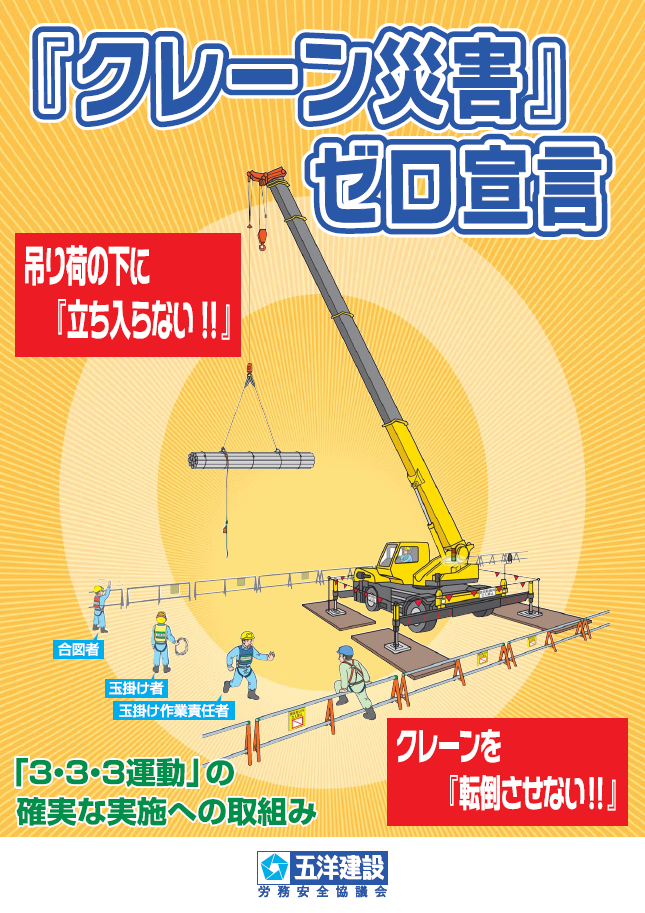
We have designated crash accidents, fall accidents and heavy machinery (crane) accidents as "Specific Accidents" and focus our efforts for preventing these accidents amongst all other accidents. Regarding the prevention of crash and fall accidents, we introduced a "Immediate 'Red Card' System for Workers Who Do Not Use Safety Belt*1," which suspends a worker from the construction site when he/she is found not using a fall prevention equipment (commonly, a safety belt) in a place where a safety belt is mandatory. As for the prevention of heavy machinery and crane accidents, we enforce the "Zero Heavy Machinery Accident Declaration" to reconfirm prohibition of entering a working radius of the equipment, and to assign guards to prevent any entry. Also, we enforce the "Zero Crane Accident Declaration," "Exercise 333*2."
*1 Workers who were suspended will return to the site after receiving the safety training again.
*2 Exercise 333: (1) 3 m away from the suspended load when slinging. (2) Stop hoisting the lifted load at 30 cm.
(3) Roll up after counting 3 seconds when hoisting the lifted load (introduced in 2008).
Strengthening Communication
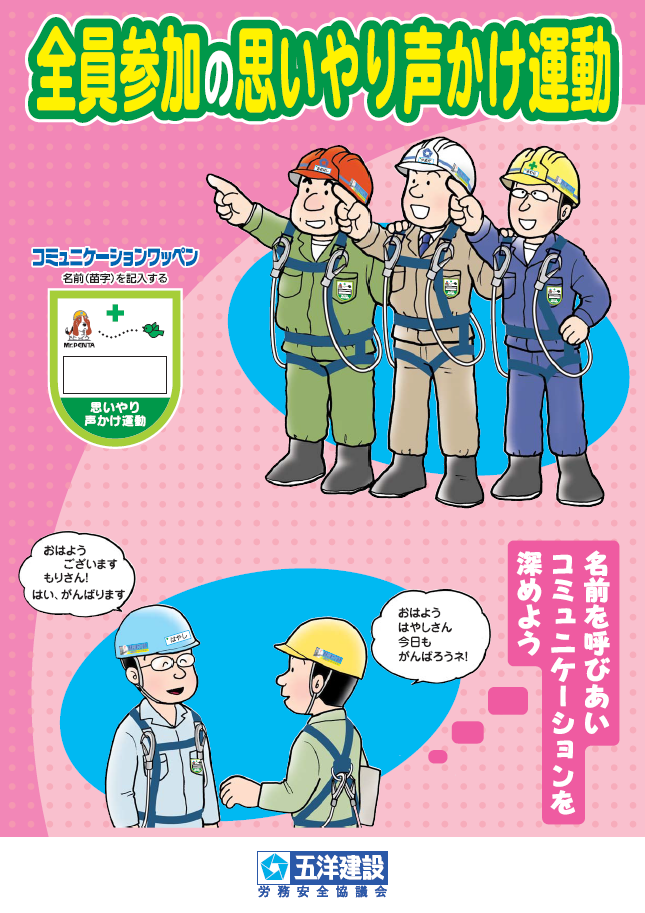
Compassionate and Friendly Greeting Campaign
Since 1998, we have been promoting the Compassionate and Friendly Greeting Campaign. We make every construction staff to call each other by name for deepening the sense of fellowship and communication, aiming to create a safe, healthy, and vibrant workplace culture with open communication, and achieve "zero accidents, zero disasters, and zero illnesses."
Thorough Coordination and Communication between Work Tasks
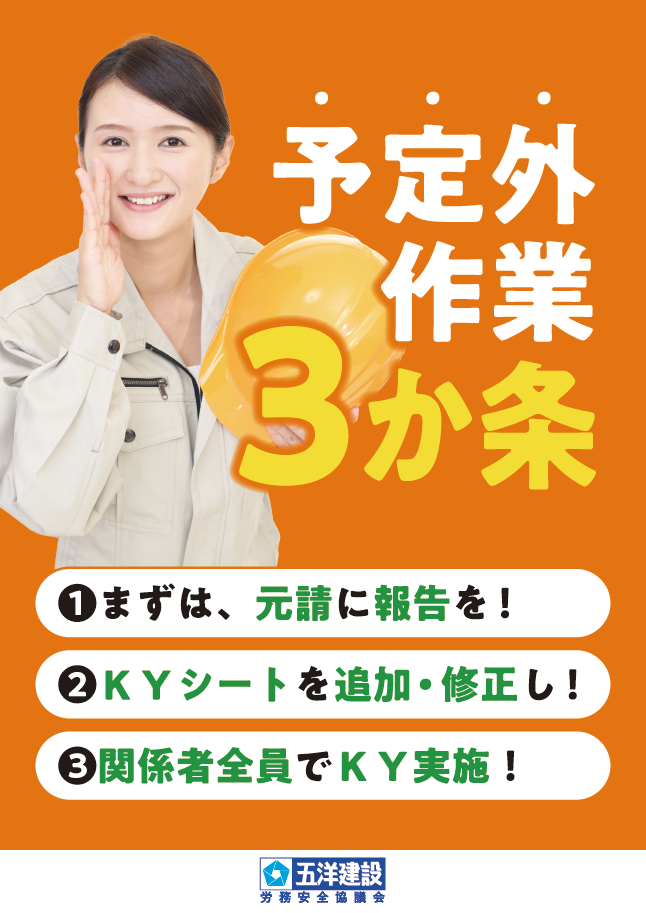
In principle, unscheduled work is prohibited. If unscheduled work must be performed, we have established the following procedures to ensure thorough coordination and communication between work tasks.
- Temporarily suspend work and report to the prime contractor
- Review procedures, etc., and create a "Record of meeting for unscheduled work"
- After obtaining approval from the prime contractor, inform the workers and conduct an on-site risk assessment
We also display posters to make employees aware that Three Principles of unscheduled work.
Safety as a Top Priority
We are engaged in various health and safety promotion activities to eliminate occupational accidents.
Examples of Initiatives in FY 3/26
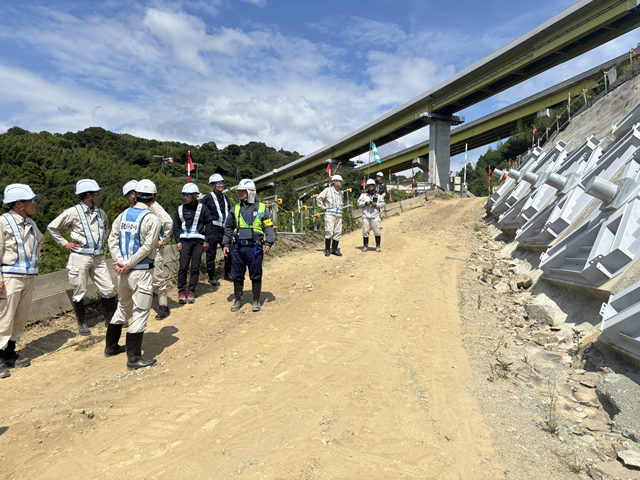
Shikoku Branch "Joint Safety Patrol with the Penta-Ocean Construction Labour Safety Council" (August 22, 2025)
A joint safety patrol was conducted at two POC sites: the Futami Landslide Mitigation Project and the New Uwajima City Date Museum Construction Project. The patrol was attended by three representatives from the Penta-Ocean Construction Labour Safety Council led by the chairman, alongside six POC representatives led by the Executive Vice President. Participants instructed site personnel to strictly coordinate operations to avoid working directly above or below each other, monitor personal health, and ensure timely hydration and salt intake to mitigate heatstroke risks.
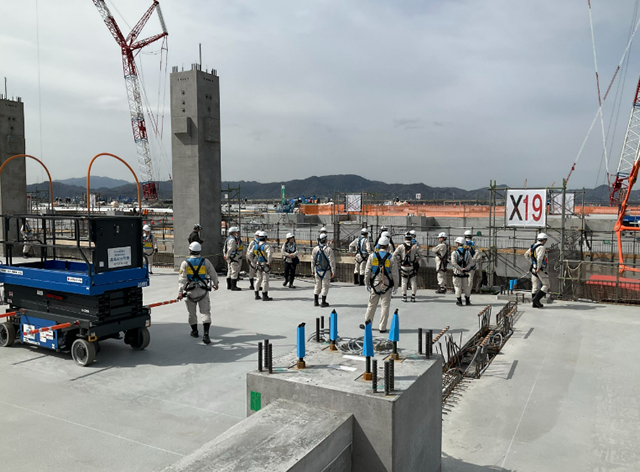
Osaka Branch: Patrol Conducted by the Environment Health and Safety Committee (March 6, 2026)
Six members of the Environmental Health and Safety Committee, led by the Head of the Safety, Quality and Environment Management Divisions Group, conducted a safety patrol for the BPO Iwaya District Project and ESR Kawanishi DC3 New Construction Project. The committee members provided encouraging feedback, praising the excellent on-site communication, while ensuring strict compliance with the no-entry rule under suspended loads.
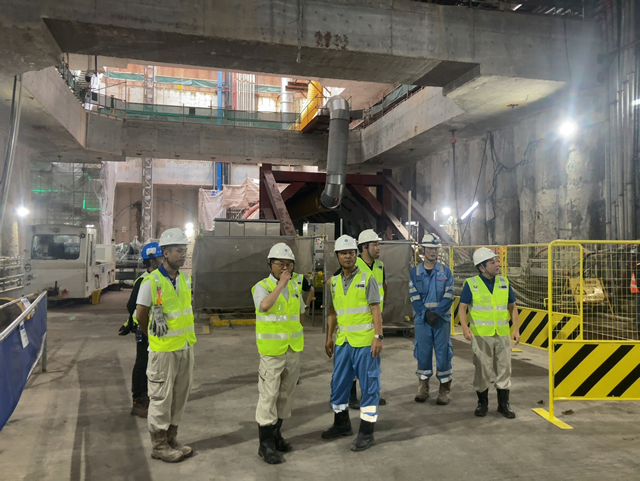
"Safety Week 2025" in Singapore (from June 3 to June 6, 2025)
During Safety Week in Singapore, the Head of the Safety, Quality and Environment Management Divisions Group, conducted a site patrol. The visit featured exchanges on local challenges and initiatives, alongside presentations on Japanese safety management techniques and disaster prevention measures. This initiative helped elevate local safety practices while reinforcing a shared commitment to on-site safety between both teams.
Initiatives in Partnership with Subcontractors
Penta-Ocean Construction Labour Safety Council
In order to ensure safety and health together with our subcontractors, we have organised the Penta-Ocean Construction Labour Safety Council which consists of 1,155 member companies (as of April 2026). The Labour Safety Council works to improve knowledge levels and skills regarding labour safety and carries out various activities to prevent accidents and create a foundation for smooth cooperation between POC and subcontractors.
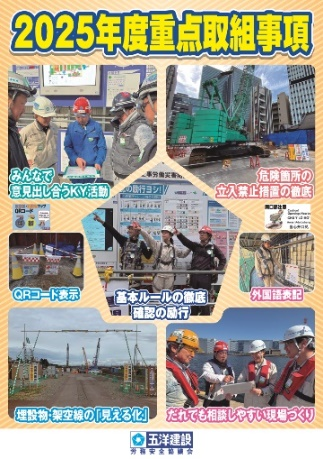
Safety and Health Patrols
Based on an annual plan, regular patrols are conducted jointly by headquarters, branch offices, and subcontractors. In addition, safety and health patrols in which the President and CEO participates are conducted twice a year.
- • Environment Health and Safety Committee (headquarters and branch offices) patrols
- • President's patrols
- • Labour Safety Council (headquarters and branch offices) patrols
- • Patrols by subcontractors' business owners
Safety, Health and Environment Promotion General Meeting
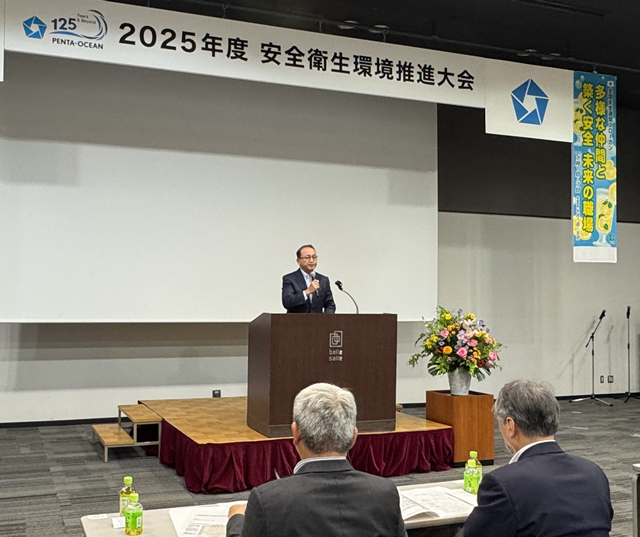
In June, the headquarters, branch offices, and the Labour Safety Council jointly hold a "Safety, Health and Environment Promotion General Meeting." This is in preparation for the National Safety Week, which is held every July. The Safety, Health and Environment Promotion General Meeting at headquarters in FY 3/27 was held jointly with the Labour Safety Consultation Council Federation, with the President, CEO and Representative Director in attendance. At the same meetings held across our branches, we actively promote health and safety initiatives and award safety commendations to subcontractors and individuals for their outstanding safety contributions.
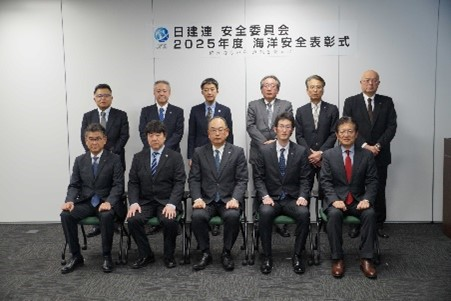
Award from the Japan Federation of Construction Contractors (Nikkenren)
On February 26, 2026, Nanao Port Yatashin Disaster Recovery Work Office undertaken by the POC-Mirai Construction JV received the Maritime Safety Committee Chairman's Award from the Japan Federation of Construction Contractors (Nikkenren). Additionally, for their dedicated efforts on this project, our partner company Raito Kogyo Co, Ltd. was honored with the Maritime Safety Subcommittee Special Award, while Mr. Kunihiko Kitade of Raito Kogyo Co., Ltd. received the Individual Award.
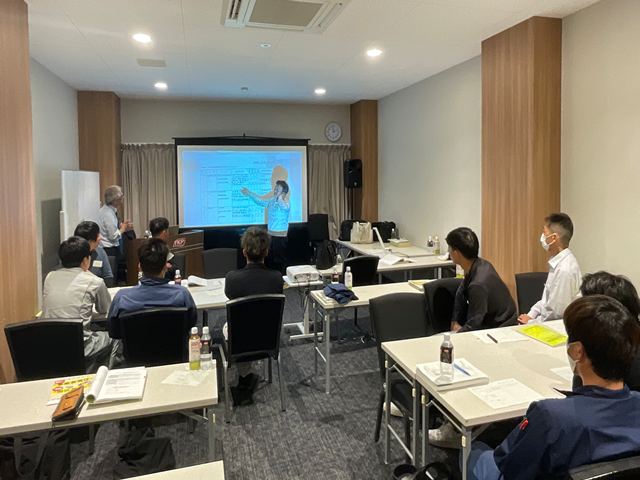
Education and Training Programmes
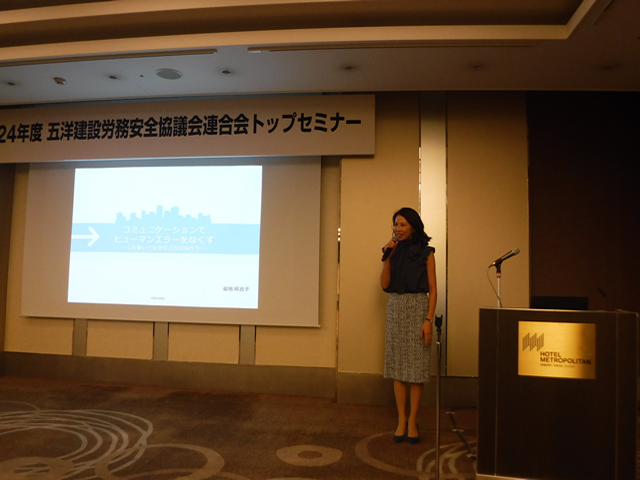
We hold various education and training programmes, such as foreman and safety and health manager education, safety officer training, risk sensitivity education, top seminars of the Labour Safety Consultation Council Federation, and business owner education, to enhance the knowledge and skills of our members.
For education at the Safety and Quality Control Education Office, click here
Excellent Foreman Certification System
In FY3/14 we introduced an Excellent Foreman Certification System to "secure and train future leaders" and to "improve the treatment given to construction engineers." Certified excellent foremen are provided with a certain amount of excellent foreman benefit according to the number of days worked at our sites, and those whose annual working days exceed 100 days receive an additional benefit. In addition, the employer's share of social insurance premiums for allowances is paid separately. In FY3/26, 530 foremen including 76 newly certified foremen were certified as excellent foremen.
Foremen's Associations
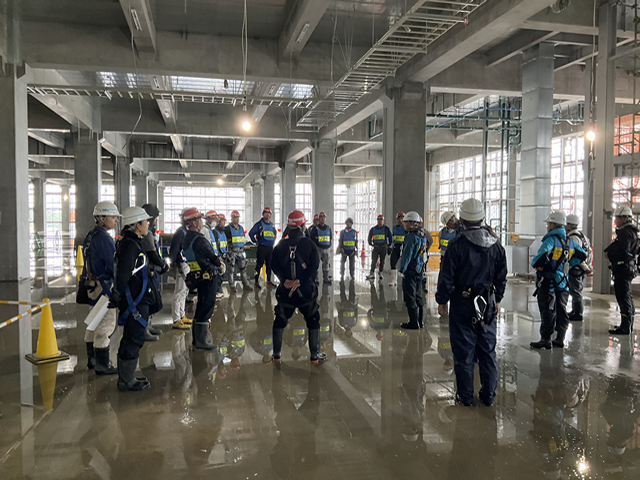
At each site, we organise foremen's associations, consisting of foremen and safety and health managers from multiple subcontractors, and carry out activities to raise safety and health awareness among all workers.
Association Members

- Sustainability Management
- Report / Data
- Environment
- Social
- Governance
- External Recognition / Participation in Initiatives