This Page is Home Sustainability
 EnvironmentBiodiversity, Aquatic Environment
Biodiversity, Aquatic Environment

Under the corporate philosophy that "Our greatest contribution to society is the construction of high-quality infrastructure," Penta-Ocean Construction Group practices sustainability management with a strong emphasis on ESG. We believe that preserving a nature-rich environment for future generations is fundamental to our business activities. Guided by this conviction, we seek to build trust with local communities by integrating environmental considerations into our manufacturing processes and related business activities.
In May 2023, Penta-Ocean Construction Group identified "Responding to Climate Change Issues" and "Creation of a Rich Environment" as Materiality (material issues) in the environmental domain. We are accelerating our efforts toward the development of a sustainable society by delivering social value through our construction business while simultaneously minimizing the environmental footprint associated with our business operations.
In August 2025, we formulated the "Action Guidelines on Biodiversity." In line with these guidelines, we will strengthen our initiatives for biodiversity conservation and the creation of aquatic environments. Toward the goal of achieving nature positivity, we aim to minimize the negative environmental impacts of our business activities and contribute to restoring and regenerating nature by 2050.
Starting in FY 3/27, we will begin disclosing nature-related financial information in accordance with the TNFD Final Recommendations. Through this disclosure, we transparently demonstrate our expertise in aquatic restoration and a proven track record of integrating proprietary environmental technologies into our construction processes.
This report aims to enhance understanding of Penta-Ocean Construction Group's specific initiatives for the global environment among a wider audience.

*The Taskforce on Nature-related Financial Disclosures (TNFD) is an international initiative that develops a framework designed to enable corporations to appropriately evaluate and disclose their risks and opportunities related to natural capital and biodiversity to investors and other stakeholders
Information Disclosure Aligned with the TNFD Recommendations 2026
[General Requirements]
-
Application of Materiality
Penta-Ocean Construction Group has identified "Responding to Climate Change Issues" and "Creation a Rich Environment" as Materiality (material issues) in the environmental domain. In identifying our Materiality, we applied the double materiality approach, assessing both the impacts (materiality) of nature related issues on Penta-Ocean Construction Group and the impacts (materiality) of our business activities on the natural environment. -
Scope of Disclosure
This disclosure focuses on the marine civil engineering business, which was identified as having a high environmental impact within our core domestic civil engineering portfolio. -
Areas with High Nature-Related Risks
As areas with high nature-related risks, we selected construction sites for marine civil engineering projects in Japan. -
Integration with Other Sustainability-Related Disclosures
This report is aligned with our existing TCFD disclosures and has been prepared in accordance with the TNFD recommendations. Going forward, we will consider integrating this report with our TCFD and other sustainability disclosures, with reference to the SSBJ standards and other frameworks. -
Time Horizons Considered
In line with the TNFD framework, we analyze medium- to long-term nature-related risks and opportunities. At Penta-Ocean Construction Group, the Sustainability Promotion Committee monitors our policies, structures, and strategies, reviewing them for areas of insufficiency or excess and promoting continuous improvement. -
Engagement with Local Communities and Affected Stakeholders
In the "Action Guidelines on Biodiversity" established in August 2025, we set out our commitment to "Stakeholder Engagement and Collaboration". In accordance with these guidelines, we will promote initiatives toward nature-positive outcomes and coexistence with nature by engaging with customers, local communities, NPOs/NGOs, and academic institutions
[Governance]
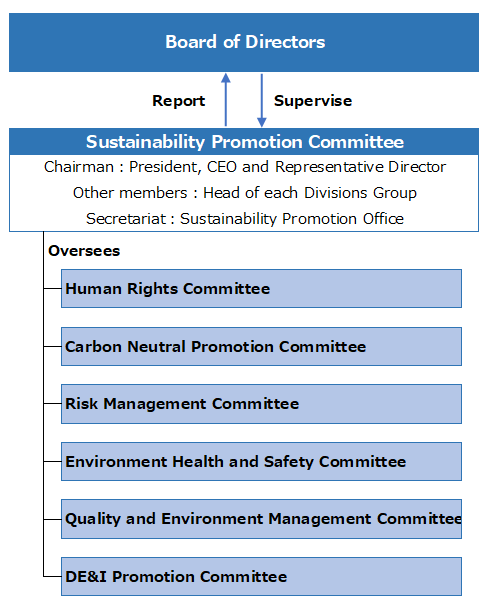
We recognize that appropriate responses to sustainability-related issues are important management priorities that help reduce risks while creating new business opportunities. Based on this recognition, we have established the Human Rights Committee, the CN Promotion Committee, the Risk Management Committee, the Environment Health and Safety Committee, the Quality and Environmental Management Committee, and the DE&I Committee, under the Sustainability Promotion Committee chaired by the President, CEO and Representative Director.
Nature-related issues are deliberated by the Sustainability Promotion Committee, which meets four times a year under the chairmanship of the President, CEO and Representative Director. The Sustainability Promotion Committee formulates biodiversity-related action guidelines and, in accordance with the LEAP approach, evaluates our dependencies and impacts, and analyzes the related risks and opportunities. Under the Sustainability Promotion Committee, the Human Rights Committee has established Penta-Ocean Construction Group Human Rights Policy to ensure respect for the rights of indigenous peoples and local residents impacted by environmental changes, and to evaluate the effectiveness of our stakeholder engagement.
The Board of Directors receives reports from the Sustainability Promotion Committee and oversees all sustainability-related matters, including nature-related initiatives.
[Strategy]
Focusing on our core business of marine civil engineering, we conducted evaluations using the LEAP approach (under the TNFD Framework v1.0). The scope (coverage) of the LEAP assessment is as follows.
Locate: Identified our 10 domestic direct-operation sites and analyzed their interfaces with nature
Evaluate: Conducted questionnaires with project managers at the seven target sites to assess dependencies and impacts
Assess: Analyzed risks and opportunities associated with the identified dependencies and negative impacts
Prepare: Set metrics and targets based on the results of the above process
-
Selection of Projects for Evaluation under the LEAP Approach
From an initial pool of 140 domestic sites above a certain size, 10 sites were selected by considering regional and ecological characteristics. Nature-related issues at these sites were analyzed using the Ministry of the Environment's environmental assessment database "EADAS" and the Japan Coast Guard's "UMISHIRU, Marine Condition Display System".
Of the 10 sites analyzed, all were found to include areas of high biodiversity importance within a 5-km radius, and 3 sites were located within natural parks. In addition, 9 sites were situated within 1 km of major fishery resources.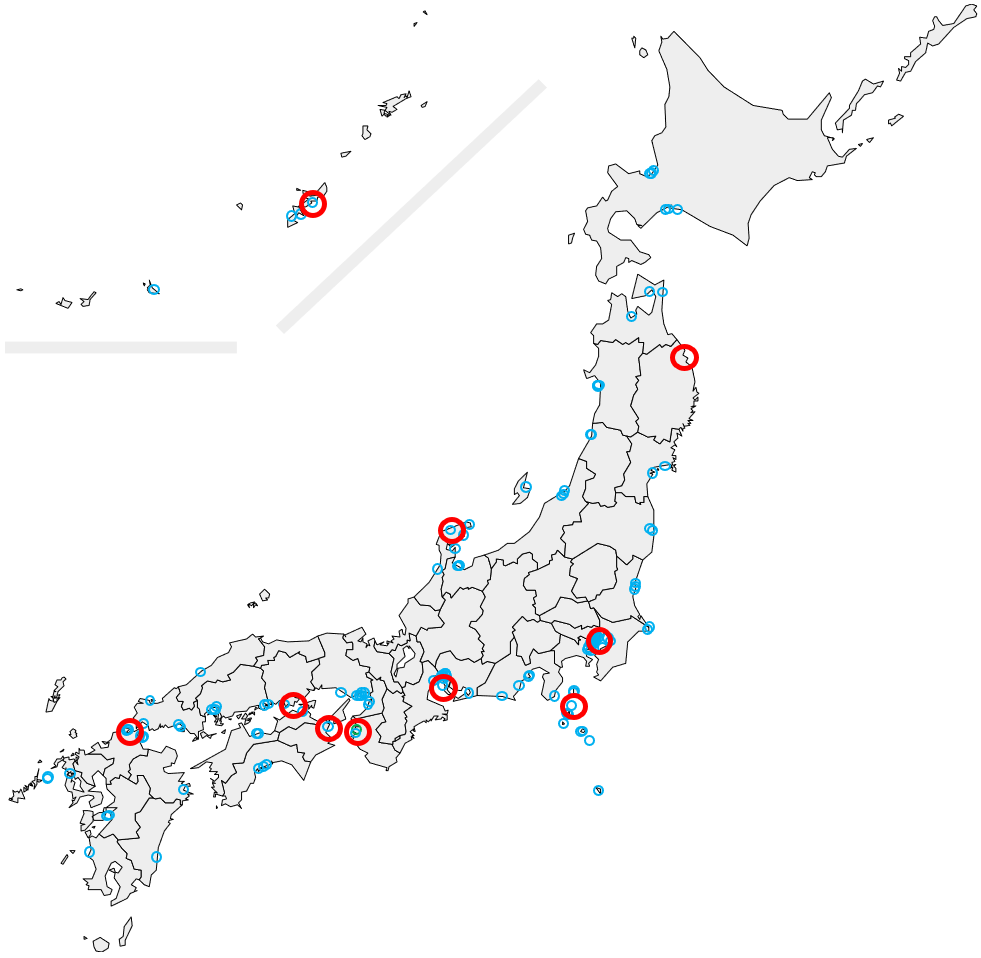
Nature Interface Analysis across 140
Sites and the Location of 10 Target SitesNature Interface Analysis of the 10 Sites 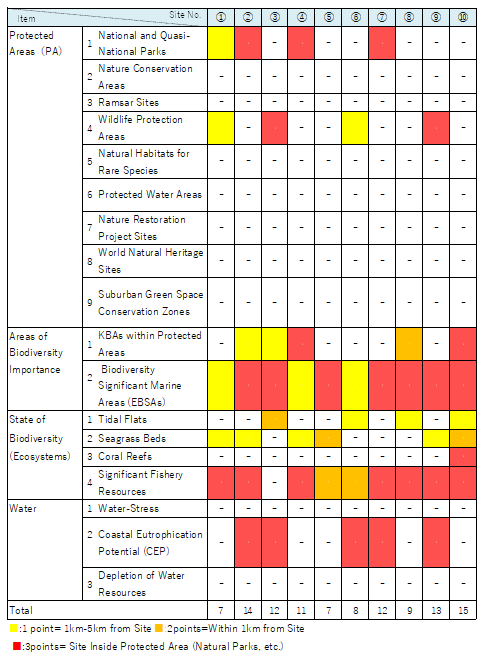
-
Dependencies and Impacts
Based on the results of the "Locate" phase, we selected 7 sites from the 10 sites that exhibited relatively high total interfaces with nature and involved our main types of work, such as dredging, earth disposal, ground improvement, as well as foundation and superstructure construction for breakwaters and revetments. We then conducted a questionnaire survey with the project managers at each site to assess nature-related dependencies and impacts associated with each type of work.
Work Types of the Seven Selected Sites
Work Type ② ③ ④ ⑦ ⑧ ⑨ ⑩ Dredging, Earth Disposal ○ ○ Ground Improvement ○(Land) ○(Marine) ○(Marine) Foundation and Superstructure Work ○ ○ ○ After developing a heat map of dependency and impact factors for each site, we found that the dependency and impact patterns differed more by construction purpose and work type than by geographical characteristics. Based on this finding, we structured our analysis around "construction purpose" and "work type." While our analysis confirmed dependencies on freshwater, seawater, and construction materials, we determined that direct impacts on nature carry higher materiality. Accordingly, the following table summarizes these key impacts.
Construction Purpose Work Type Impacts Changes in the State of Nature by the Impacts Maintenance of Shipping Routes and Berths Dredging/Earth Disposal Changes in Seabed Topography Disturbance of Habitats of Marine Life Increased Seawater Turbidity and Potential Oil Leakage Adverse Effects on Marine Life Due to Water Pollution and Oil Leakage Airport Maintenance
(Seismic Reinforcement)Ground Improvement
(Land)Leakage of Alkaline Wastewater Generated during Ground Improvement Adverse Effects on Marine Life Dumping of Plastic Waste Formation of Microplastics and Effects on Marine Life Construction of Breakwaters, Revetments Ground Improvement (Marine),
Foundation and Superstructure Work (Breakwaters,
Revetments)Changes in Seabed Topography Disturbance of Habitats of Marine Life Noise and Vibration During Ground Improvement Adverse Effects of Noise and Vibration on Marine Life Increased Seawater Turbidity and Potential Oil Leakage Adverse Effects on Marine Life Due to Water Pollution and Oil Leakage Construction of Wind Power Generation Facilities Foundation and Superstructure Work
(Wind Power Generation Facilities)Noise and Vibration during Pile Driving Adverse Effects of Noise and Vibration on Marine Life Dumping of Plastic Waste Formation of Microplastics and Effects on Marine Life Increased Seawater Turbidity and Potential Oil Leakage Adverse Effects on Marine Life Due to Water Pollution and Oil Leakage -
Risks and opportunities
Based on the analysis of dependencies and impacts for each type of work, we identified risks and opportunities such as changes in seabed topography, water pollution, leakage of hazardous substances, and illegal dumping. Although the specific dependencies and impacts differed by work type, two major risks were identified across the projects: (1) reputational risk arising from criticism of negative impacts of our work on the marine ecosystem, and (2) the risk of legal violations and associated liabilities that may require additional response costs. The main opportunities include increased orders driven by our proprietary technologies in dredging and reclamation projects, as well as the contribution to the creation of blue carbon ecosystems.
Major Risks
Type of Work Related Regulations Dependencies and Impacts on Nature Type of Risks Details of Risks Dredging,
Earth DisposalBasic Act on Biodiversity 【Changes in Seabed Topography】
Disturbance of Habitats of Marine LifeTransition Risk, Reputation Transition Risk, Reputation
Risk of Criticism for Negative Impacts on Marine Ecosystems
Transition Risk, Liability
Risk of Legal Violations and Associated Response Costs
Act on Prevention of Marine Pollution and Maritime Disaster 【Water Turbidity】
Impacts on Ecosystems Due to Water Pollution and Oil LeakageTransition Risk, Reputation Transition Risk, Liability Ground Improvement
(Land)Water Pollution Prevention Act 【Water Pollution, Leakage of Hazardous Substances】
Impacts on Ecosystems Due to Water Pollution and Oil LeakageTransition Risk, Reputation Transition Risk, Liability Act on Waste Management and Public Cleaning 【Illegal Dumping】
Dumped Plastics Entering the Ocean, Formation of MicroplasticsTransition Risk, Reputation Transition Risk, Liability Ground Improvement,
Foundation and Superstructure Work (Breakwaters,
Revetments)Basic Act on Biodiversity 【Changes in Seabed Topography】
Disturbance of Habitats of Marine LifeTransition Risk, Reputation Act on Prevention of Marine Pollution and Maritime Disaster 【Water Turbidity】
Impacts on Ecosystems Due to Water Pollution and Oil LeakageTransition Risk, Reputation Transition Risk, Liability Foundation and Superstructure Work
(Wind Power Generation Facilities)Basic Act on Biodiversity 【Noise and Vibration】
Adverse Effects on Marine LifeTransition Risk, Reputation Transition Risk, Liability Act on Prevention of Marine Pollution and Maritime Disaster 【Water Turbidity】
Impacts on Ecosystems Due to Water Pollution and Oil LeakageTransition Risk, Reputation Transition Risk, Liability Water Pollution Prevention Act 【Water Pollution, Leakage of Hazardous Substances】
Impacts on Ecosystems Due to Water Pollution and Oil LeakageTransition Risk, Reputation Transition Risk, Liability Key Opportunities
Type of Work Categories of Opportunities Outline of Opportunities Details of Opportunities Dredging,
Earth DisposalCorporate Performance Markets Increase in Orders Through Proposals Utilizing Proprietary Technologies
(Calcia Drop Mixing Vessel, Tremie Pipe)Growing Environmental Awareness Drives Increased Demand for Technologies Such as Calcia-improved Soil, Creating Expanded Opportunities for Related Construction Work and Improving the Utilization of our Proprietary Calcia Drop Mixing Vessel Products and Services Sustainability Performance Restoration and Regeneration of Ecosystems Creation of Ecosystem Through Reclamation Using Calcia-Improved Soil Made from Dredged Soil • Creation of Biological Habitats by Remediation of Deep Trenches and Development of Shallow Areas using Calcia-Improved Soil
• The Shallow Areas Created using Calcia-Improved Soil Facilitate Carbon Sequestration through the Formation of Blue Carbon Ecosystems, while also Contributing to the Securing of Fishery Resources.
• The Quantification of CO2 Absorbed by the Newly Formed Seaweed Beds Enables the Certification and Issuance of J Blue Credits®.Preservation of Ecosystems Preservation of Ecosystems by Utilizing Dredged Soil • Repurposing Dredged Soil as Calcia-Improved Soil Reduces the Volume of Dredged Soil, Thereby Extending the Remaining Capacity of Disposal Sites
• Reducing the Volume of Dredged Soil for Disposal Eliminates the Need for New Site Development or Expansion, Thereby Minimizing Negative Impacts on Ecosystems. -
Countermeasures
-
Corporate-Level Countermeasures
In response to the reputational and liability risks identified through the above process, the Penta-Ocean Construction Group Code of Conduct emphasizes compliance with laws and regulations, environmental conservation and creation, and contributions to local communities. In addition, the Group promotes these principles among employees through specialized environmental education and compliance training. -
Countermeasures at each site
Type of Work Risk Types Dependencies and Impacts on Nature
(High Risks)Countermeasures against Negative Impacts Dredging,
ReclamationTransition Risk,
Reputation
Transition Risk,
Liability【Water Turbidity】
Impacts on Ecosystems Due to Water Pollution and Oil LeakageEnsuring Regular Inspection of Fuel Tanks and Oil Pans
Preparing Oil Fences, Absorbent Pads in Case of Potential Oil Spills
Measuring Water Turbidity to Ensure Turbidity Levels in the Area Remain Consistent with Those in Surrounding Waters
Scheduling Construction During Periods of Lower Environmental Impact
Implementing Habitat Restoration in Alternative Locations as Part of Environmental Mitigation EffortsGround Improvement
(Land)【Water Pollution, Leakage of Hazardous Substances】
Impacts on Ecosystems Due to Water Pollution and Oil LeakageInstalling Wastewater Treatment Systems
Conducting Regular Water Quality Inspections【Illegal Dumping】
Dumped Plastics Entering the Ocean, Formation of MicroplasticsEnsuring Proper Separation and Collection of Waste
Conducting Regular PatrolsGround Improvement
Foundation and Superstructure Work
(Breakwaters,
Revetments)【Water Turbidity】
Impacts on Ecosystems Due to Water Pollution and Oil LeakageEnsuring Regular Inspection of Fuel Tanks and Oil Pans
Preparing Oil Fences, Absorbent Pads in Case of Potential Oil Spills
Measuring Water Turbidity to Ensure Turbidity Levels in the Area Remain Consistent with Those in Surrounding Waters
Scheduling Construction During Periods of Lower Environmental Impact
Implementing Habitat Restoration in Alternative Locations as Part of Environmental Mitigation EffortsFoundation and Superstructure Work
(Wind Power Generation Facilities)【Water Turbidity】
Impacts on Ecosystems Due to Water Pollution and Oil LeakageEnsuring Regular Inspection of Fuel Tanks and Oil Pans
Preparing Oil Fences, Absorbent Pads in Case of Potential Oil Spills
Measuring Water Turbidity to Ensure Turbidity Levels in the Area Remain Consistent with Those in Surrounding Waters
Scheduling Construction During Periods of Lower Environmental Impact
Implementing Habitat Restoration in Alternative Locations as Part of Environmental Mitigation Efforts【Water Pollution, Leakage of Hazardous Substances】
Impacts on Ecosystems Due to Water Pollution and Oil LeakageInstalling Wastewater Treatment Systems
Conducting Regular Water Quality Inspections
-
Corporate-Level Countermeasures
Management of Risks and Impacts
-
Corporate-level Management of Risks and Impacts
Under the "Principle of Environmental Activity" in our Environmental Management framework, we commit to preventing environmental accidents by continuously educating employees of Penta-Ocean Construction and subcontractors on the importance of environmental conservation. We also aim to integrate the nature-related impacts, risks, and opportunities identified through the analysis described in this report into our environmental management practices to enhance overall effectiveness.
In addition, we have been disclosing environmental conservation costs since FY 3/2001. These include Costs to Reduce Environmental Impact which Occurs within the Business Areas, Environmental Remediation Costs (costs incurred for remediation of environmental damage), Costs Incurred for Ecosystem Maintanenance Activities, as well as Costs Incurred for Recycling Construction By-Products, Final Disposal of Waste, aiming to streamline environmental preservation and enhance management effectiveness. -
Site- and Project-level Risk and Impact Management
Management item Management method [Pre-Construction Phase]
Pre-Construction Environmental Review MeetingIdentifying Environmental Risks (including biodiversity) Prior to the Start of Construction [Pre-Construction Phase]
Biodiversity Action Plan (BAP)
(may be included in the project construction plans)Planning Management Methods for Environmental Considerations When Potential Impacts on Biodiversity are Anticipated [During Construction]
Implementing Environmental Consideration Measures (plans)
Ensuring Compliance with Environmental Laws and Regulations
Promoting Recycling of Construction WasteEnsuring Information Sharing and Fostering Awareness among Personnel at Sustainability Morning Meetings
Conducting Environmental Monitoring
Conducting Environmental Patrols
[Metrics and Targets]
Our past performance and targets in response to the global core metrics and targets recommended by the TNFD are summarized below. In our construction business, it is essential to properly disclose environmental impacts, particularly those affecting aquatic areas, arising from land-use changes, pollution, and resource use. Accordingly, we have established targets aligned with our Materiality. Going forward, we will continue to advance environmental initiatives and strengthen the management of nature-related risks and impacts, while progressively expanding the scope and targets of our disclosures.
-
Global Core Metrics on Dependency and Impacts
Metric no. Factors of Natural Change Indicators Disclosure Content of Penta-Ocean Construction Group Targets * Climate Change GHG Emissions CO2 Emissions C1.0 Land Use Change in Terrestrial,
Freshwater,
and Marine EcosystemsTotal Spatial Footprint Area of Blue Carbon (J-Blue Credit®) Creation (ha)
Number of Projects Involving the Conservation, Restoration, and Creation of Shallow Areas and Tidal Flats (Cases)
Number of Projects Involving the Conservation, Restoration, or Creation of Biological Habitats (Cases)- C1.1 Extent of Land Use Change in Terrestrial,
Freshwater,
and Marine EcosystemsC2.0 Pollution / Pollution Remediation Pollutants Released to Soil Number of Violations of the Marine Pollution Prevention Act and Related Regulations (Domestic)
Number of Violations of the Soil Contamination Countermeasures Act and Related Regulations (Domestic)Zero
ZeroC2.1 Wastewater Discharge Number of Violations of the Water Pollution Prevention Act and Related Regulations (Domestic) Zero C2.2 Waste Generation and Disposal Recycling Rate of Construction Waste 95% or Higher C2.3 Plastic Pollution Recycling Rate of Plastic Waste - C2.4 Non-GHG Air Pollutants • NOx emissions (t)
• SOx emissions (t)
• Amount of Asbestos Collected and Treated (t)- C3.0 Resource Use / Replenishment Water Withdrawal and Consumption • Water Withdrawal (㎥)
• Wastewater Discharge(㎥)- C3.1 Quantity of High-Risk Primary Natural Resources Sourced from Terrestrial, Marine, and Freshwater Ecosystems • Timber (t)
• Ready-Mixed Concrete (㎥)
• Structural Steel /Rebar (t)- C4.0 Invasive Alien Species and Others Measures to Prevent the Unintentional Introduction of Invasive Alien Species C5.0 State of Nature Placeholder Indicator:
Ecosystem ConditionPlaceholder Indicator:
Species Extinction Risk* Please refer to the ESG Data for actual results
-
Global Core Metrics on Risks and Opportunities
Metric no. Category Metric Our Group's Disclosure * C7.0 Risks Total Value of Assets, Liabilities, Revenues, and Expenses Assessed as Vulnerable to Nature-Related Transition Risks (Total Amount and Percentage to Total) C7.1 Total Value of Assets, Liabilities, Revenues, and Expenses Assessed as Vulnerable to Nature-Related Physical Risks (Total Amount and Percentage to Total) C7.2 Description and Monetary Value of Significant Fines, Penalties, and Litigation Incurred during the Fiscal Year under Review Due to Negative Nature-Related Impacts Amount of Fines and Penalties C7.3 Opportunities Capital Expenditures, Financing, or Investments Allocated to Nature-Related Opportunities • Investments in Environmental-Related Businesses
• Participation Fees for Nature-Related Organizations (Membership Fees)
• R&D Expenditures for Environmental Technologies (Carbon Neutrality, Biodiversity, Resource Circulation)C7.4 Increase in Revenue and Percentage from Products and Services with a Proven Positive Impacts that Deliver Demonstrable Positive Impacts on Nature, and Description of Such Impacts • Revenue from Resource-Circulation Businesses
• lue Carbon R&D Initiatives
(e.g. External Presentations)
Target: Commercialization by 2030* Please refer to the ESG Data for actual results
[Our Initiatives to Contribute to Nature Positivity]
-
Key initiatives to date
Construction business, by its nature, has significant interfaces with natural capital. We therefore implement a wide range of biodiversity conservation and restoration measures, including mitigating construction-related environmental impacts, transplanting coral reefs and seaweed beds, restoring tidal flats, creating shallow-water habitats using Calcia-improved soil, and enhancing CO2 sequestration through seagrass beds creation.
Our key achievements include:
• 1984 Creation of Firefly Habitats (Tochigi Prefecture)
• 1991 Creation of Itsukaichi Artificial Tidal Flats (Hiroshima Prefecture)
• 1994 Biotope Development at the POC Institute of Technology (Tochigi Prefecture)
• 1995 Nasu Training Center -Architecture Integrating Natural Environments- (Tochigi Prefecture)
• 2001 Eelgrass Field Transplantation (Hiroshima Prefecture)
• 2005 Omori Furusato-no-Hamabe Park - Creation of Artificial Beach and Tidal Flats - (Tokyo)
• 2008 Installation of Coral Attachment Substrates (Okinawa Prefecture)
• 2012 Development of Oshima Tidal Flats (Yamaguchi Prefecture)
• 2012 POC Headquarters Annex Building - Environmentally Friendly Offices Featuring Recycled Rainwater - (Tokyo)
• 2018 Development of Shallow Areas -Calcia-Improved Soil- (Hyogo Prefecture)
• 2021 Tamagawa Sky Bridge - Tidal Flat Restoration, etc. - (Kanagawa Prefecture)
• 2022 Development of Shallow Areas utilizing Calcia-Improved Soil - (Hokkaido)
• 2025 Deep Trench Remediation utilizing Calcia-Improved Soil - (Hiroshima Prefecture)
By leveraging the disclosure aligned with the TNFD framework, we will position these initiatives as core strategic and business opportunities, striving to continuously evolve our efforts in this domain. -
Examples of our initiatives (promotion of port-related environmental projects, R&D initiatives, environmental conservation activities, etc.)
-
Development of Shallow Areas and Seaweed Beds Using Calcia-Improved Soil
Calcia improved soil is a composite material produced by blending dredged soil with Calcia improving material (steelmaking slag with optimized particle size and composition), which offers high strength and effective turbidity suppression. Repurposing dredged material for creating shallow areas and tidal flats, remediating deep trenches, and providing backfill for revetments effectively reduces the environmental impact at disposal sites compared to conventional disposal.
We have built a specialized vessel for Calcia drop-mixing, which enables streamlined construction using Calcia-improved soil. This vessel has been successfully deployed in various projects, including shallow-area development, deep-trench remediation. The shallow areas created using Calcia-improved soil serve as new habitats, fostering the development of seaweed beds that sustain diverse fish and crustacean communities. Furthermore, the CO2 captured during seaweed growth provides significant blue carbon benefits through carbon sequestration. During dredging and earth disposal operations, we simultaneously create shallow areas using Calcia-improved soil to promote the formation of biological habitats. Following the creation of these shallow areas, we conduct extensive monitoring to confirm increases in fish catches, quantify CO2 absorption in the newly formed Seaweed beds as blue carbon, and pursue registration under the J Blue Credit® program.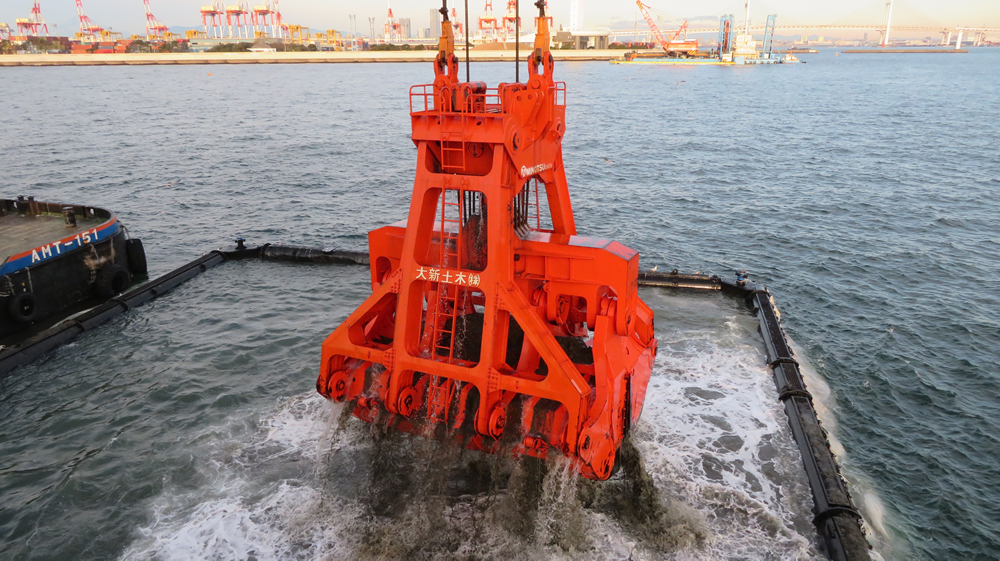
Grab Dredger 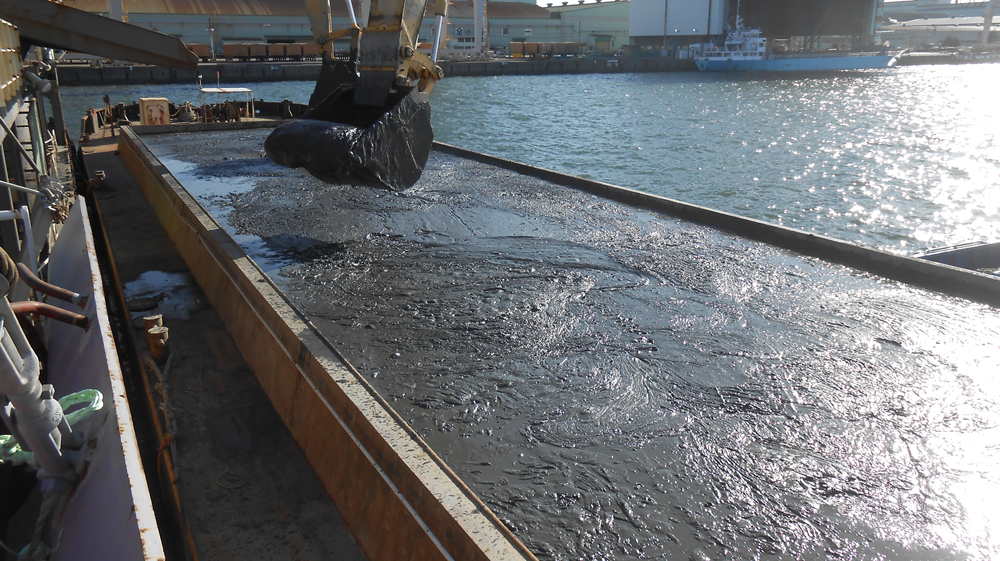
Dredged Soil Mounted on Hopper Barge 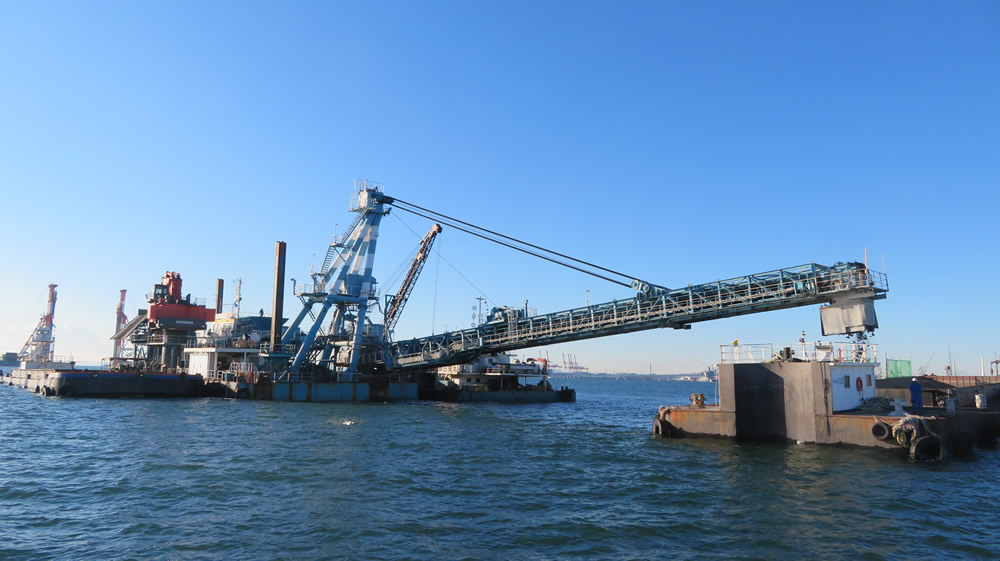
Calcia Drop Mixing Vessel 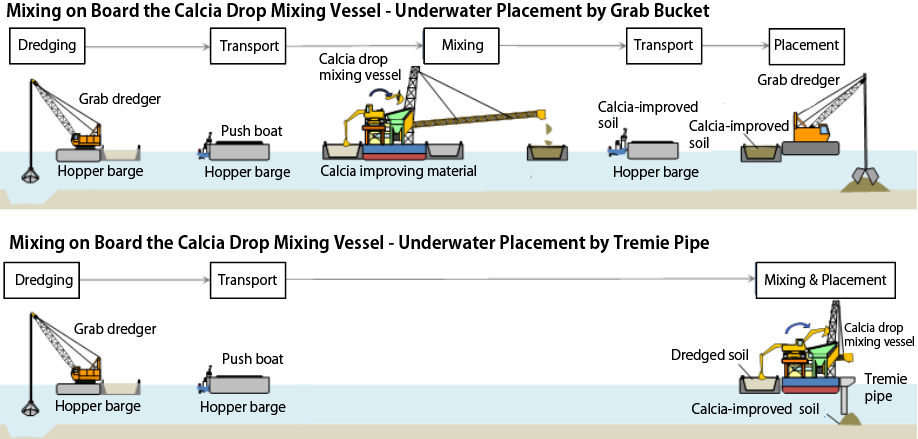
Construction Image using the Carcia Drop Mixing Vessel 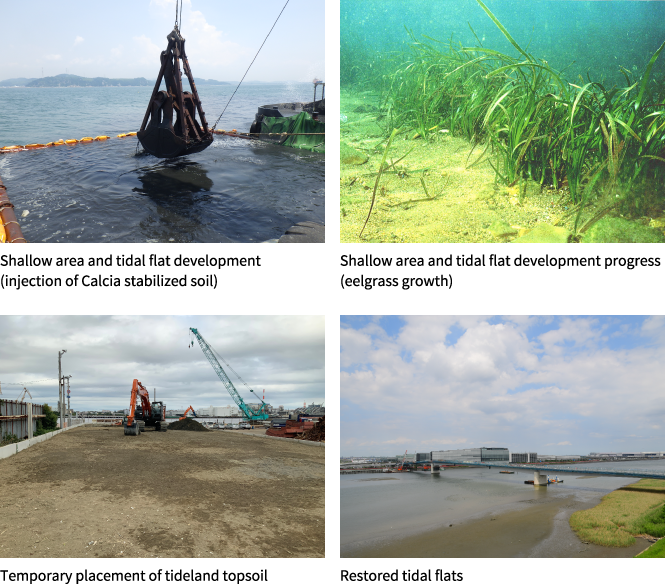
Shallow Area Creation using Calcia-Improved Soil CO2 Sequestration Eligible for Blue Carbon Certification 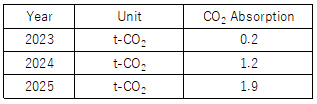
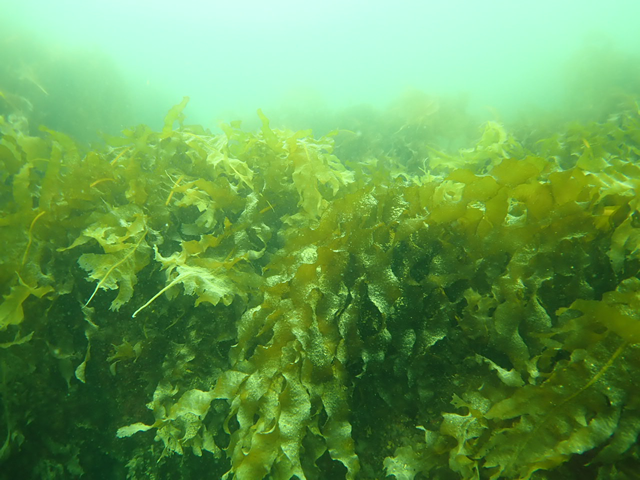
Seaweed Beds Formed in Shallow Area 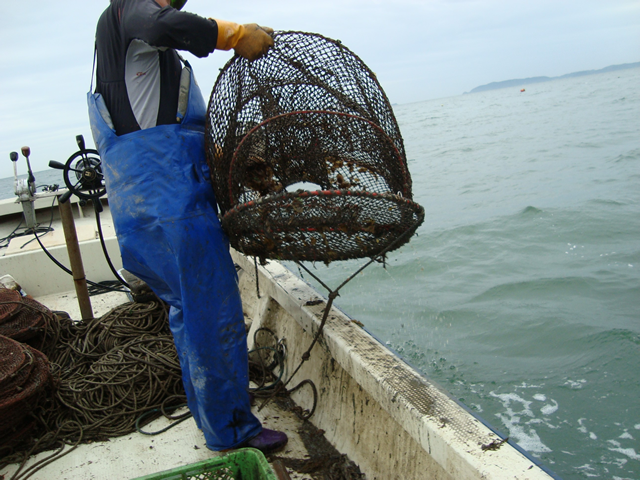
Monitoring of Catch Volumes in Pot Fishing 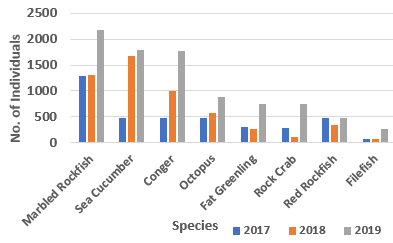
Trends in Fish Catches Development of Shallow Areas and Seaweed Beds in Himeji City, Hyogo Prefecture
-
Development of Technologies to Reduce Environmental Impact During Construction
Although Calcia-improved soil produces less turbidity compared to conventional dredged soil, some turbidity is still generated during underwater placement. To mitigate this, we developed a dedicated tremie pipe optimized for Calcia-improved soil, enabling more controlled placement and reduced turbidity. Applying this technology to shallow-area creation and deep-trench remediation with the Calcia drop-mixing vessel helps minimize ecological impacts on marine organisms in adjacent waters.
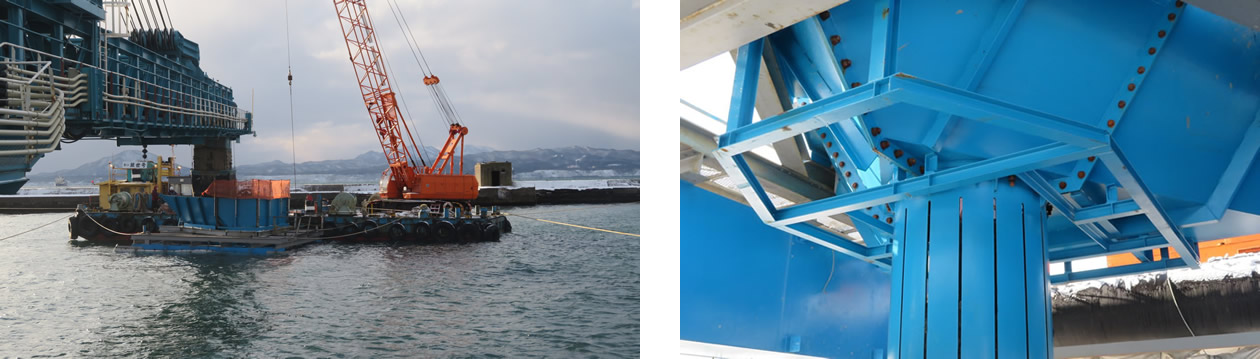
Underwater Placement of Calcia-Improved Soil using Calcia Drop Mixing Vessel and Dedicated Tremie Pipe -
Mitigation of Construction Impacts on Ecosystems
To minimize the impact on biodiversity during construction, it is essential to plan and rigorously implement appropriate conservation measures. In the Tamagawa Sky Bridge construction project, we prioritized restoring the environment to its pre-construction state. These efforts included minimizing dredging and repurposing removed dredged soil for tidal flat restoration, effectively mitigating the impact on the local tidal flat ecosystems.
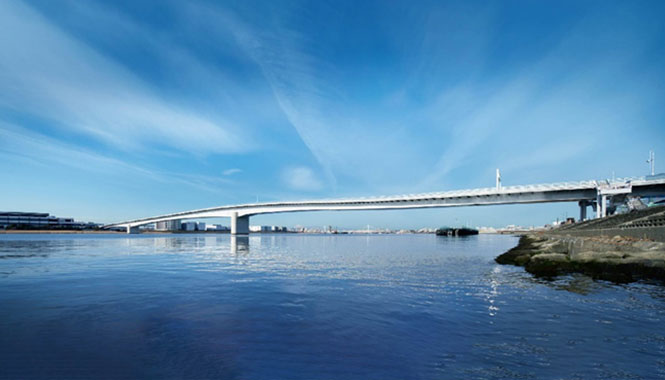
Tamagawa Sky Bridge 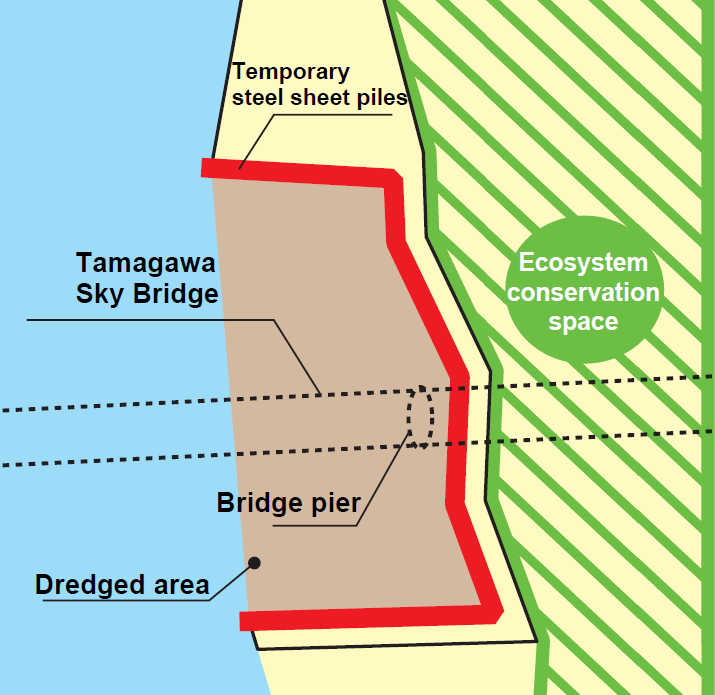
Initiatives for Environmental Preservation 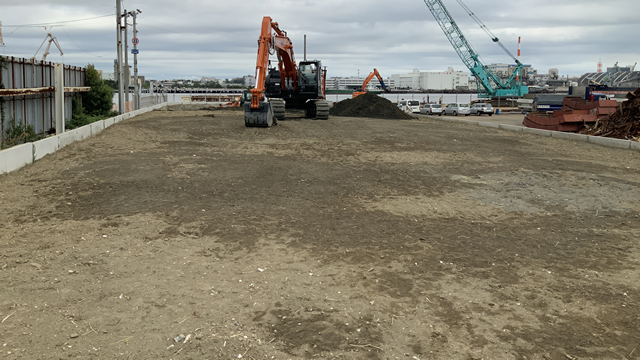
Temporary Stockpiling of Tidal Flat Surface Soil 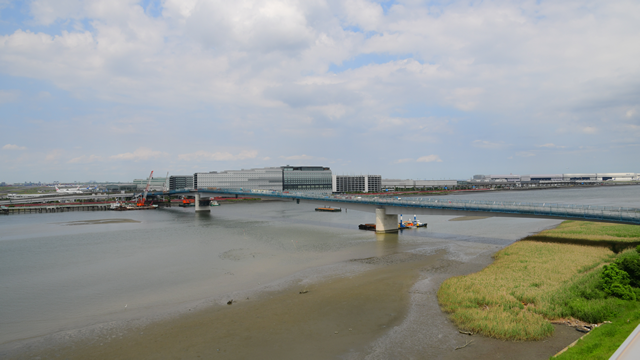
Restored Tidal Flats -
Development of Planning Methods for Marine Habitats
Successful seagrass-bed restoration and coral transplantation depend on securing environmental conditions that meet the specific habitat requirements of target species. During the planning phase, we integrate comprehensive field surveys with numerical eco-hydraulic modeling to pinpoint optimal sites for the ecosystem establishment. Furthermore, for eelgrass transplantation, which demands highly delicate handling, we have engineered a specialized method to ensure successful operation.
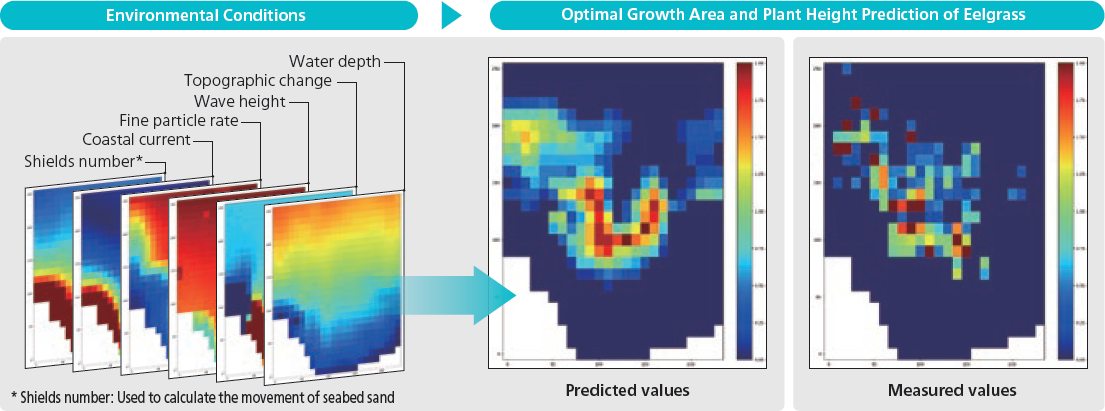
Optimal Growth Areas and Plant Height Prediction of Eelgrass 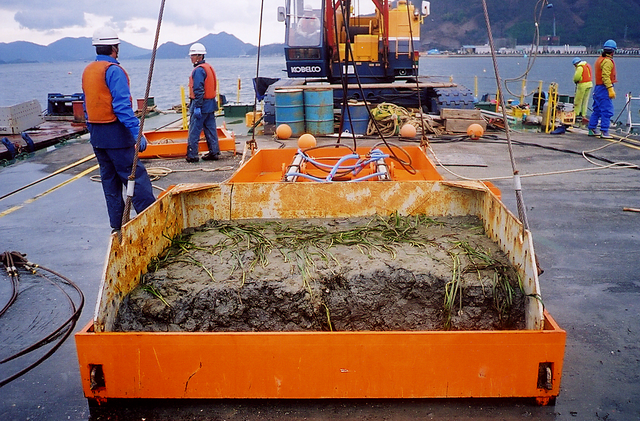
Transplanting Eelgrass
Colonies using a Dedicated Bucket -
Development of Seaweed Bed Management Technologies
By analyzing precise patterns of seaweed growth and regression, we obtain baseline information for developing maintenance and mitigation strategies against seaweed loss. Beyond accumulating environmental data from surrounding waters, we are utilizing underwater biotelemetry to capture and analyze real-time growth data across diverse seaweed and seagrass species. Through the continuous accumulation of data and insights on seaweed bed management, we strive to optimize our ecosystem creation and development technologies.
Seaweed growth in shallow areas requires stable substrates, such as stones or blocks, for successful attachment. To address this, we are deploying Calcia artificial stones, a low-carbon alternative to conventional concrete that incorporates dredged soil. Furthermore, R&D is underway to optimize these substrates for enhanced CO2 fixation and to provide a superior foundation for the attachment and healthy growth of seaweed.

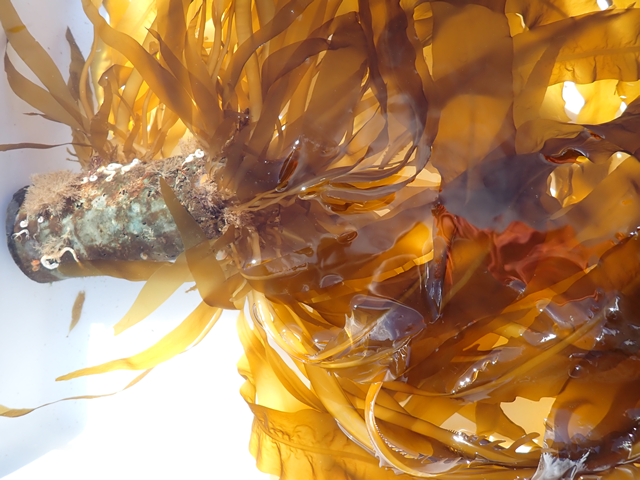
Seaweed Cultivation Tests
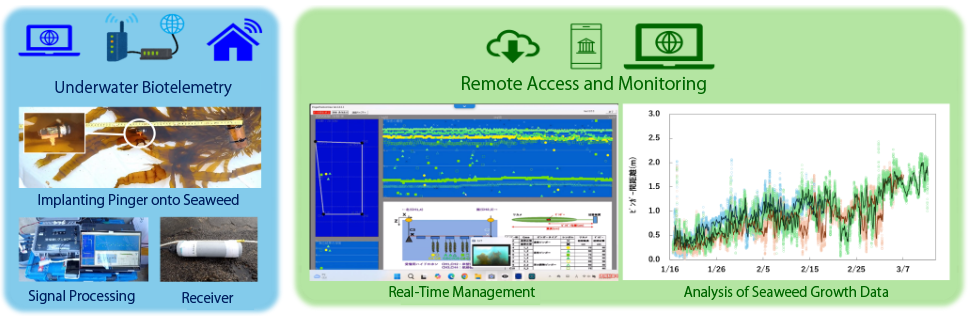
Seaweed Growth Monitoring System -
Environmental Conservation Activities
Our environmental commitment extend beyond our core construction business activities. For instance, as part of the Tokyo Bay Umi Project, a collaborative initiative led by the Marin Area Countermeasures Subcommittee of the Tokyo Bay Regeneration Promotion Council and other participating companies and organizations, we actively engaged in eelgrass bed creation through the sowing eelgrass seeds. Furthermore, we also participate in key environmental events such as Yokohama Umi Haku and the Tokyo Bay Grand Appreciation Festival, where we communicate the importance of the natural environment and showcase our advanced initiatives in environmental conservation.
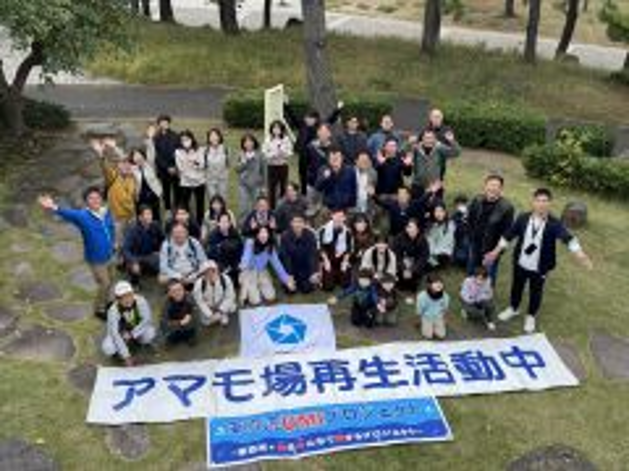
Eelgrass Beds Restoration at the Tokyo-Bay UMI Project
-
Development of Shallow Areas and Seaweed Beds Using Calcia-Improved Soil
Biodiversity Conservation in Terrestrial Areas, etc.
Development of Green Infrastructure-Related Technologies
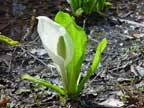
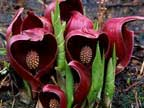
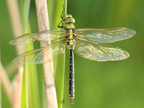
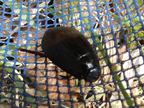
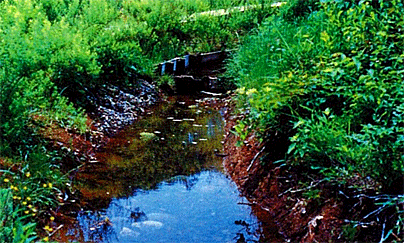
At the Institute of Technology located in Nasushiobara City, Tochigi Prefecture, we have established a biotope and have made improvements to the growth environment for aquatic plants and made efforts to attract aquatic insects such as dragonflies. These activities are part of the ongoing development of green infrastructure-related technologies. Surveys of species habitat conditions have confirmed that the biotope functions effectively as a habitat for a wide variety of organisms.
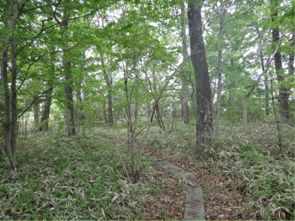
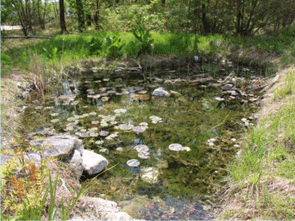
Measures for Protecting Rare Species
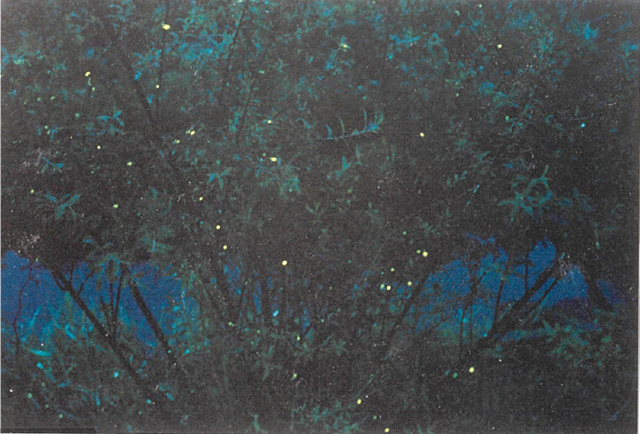
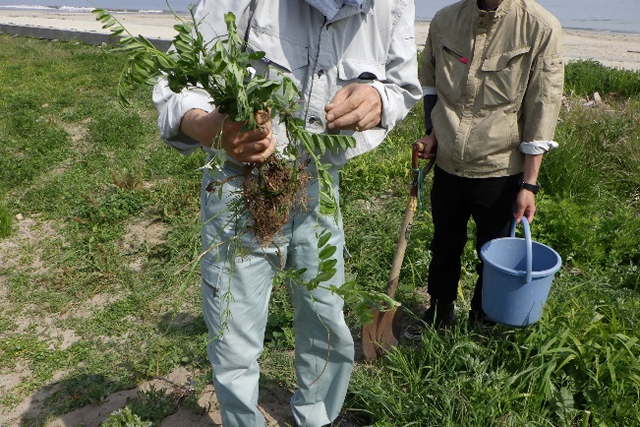
In order to protect the environment during construction work, we implement measures including protecting rare species, improving their cultivation and living environments, and relocating flora and fauna. To date, we have carried out efforts to protect species such as the Tohoku salamander, Gifu butterfly, Thunbergia laurifolia, and the small white butterfly along with improving habitats for species including fireflies and the endangered bekko tombo (Libellula angelina).
Collaboration with Outside Parties
Penta-Ocean Construction participates in the Blue Ocean Initiatives and strives to develop technologies for restoring, constructing, and maintaining seaweed beds, in collaboration with other companies and organizations involved in blue carbon efforts and oceanographic data management. In addition, as part of our commitment to conserving and expanding blue carbon ecosystems, we contribute to achieving nature positive by continuously supporting seaweed bed restoration activities and regularly acquiring "J Blue Credit ®," issued by the Japan Blue Economy Association (accredited by the Ministry of Land, Infrastructure, Transport and Tourism).
Participation in the Bule Ocean Initiative
The Blue Ocean Initiative (BOI) is an action platform dedicated to addressing social challenges related to sustainable and impactful "ocean conservation and prosperity." BOI fosters multi-faceted collaboration and co-creation among diverse ocean-related stakeholders across industry, government, academia, and the public.
J Blue Credit® Certifications
Seaweed bed creation using Calcia-stabilized soil in Aboshi area, Himeji City.
(Penta-Ocean Construction, Himeji Fishery Cooperative Aboshi Branch, Nippon Steel Corporation)
Japan Blue Economy Association
Report on the J-Blue Credit® Certificate Presentation Ceremony (Japanese)

- Sustainability Management
- Reports, Data
-
Environment
- Creation of a Sustainable and Rich Global Environment
- Environmental Management
- Responding to Climate Change
- Biodiversity, Aquatic Environment
- Resource Recycling
- Prevention of Environmental Pollution
- Effective Use of Water Resources
- Issuance of Green Bonds
- Environmentally Conscious Design and Construction
- Social
- Governance
- External Recognition / Participation in Initiatives