

This Page is Home Updates
What's New
Penta-Ocean Construction Co., Ltd.
Takuzo Shimizu, President, CEO and Representative Director
Field Demonstration Experiments of Deep-Mixing Method with Biochar Addition
Tokyo, Japan - Nov. 13, 2026 - Penta-Ocean Construction Co., Ltd. (President Takuzo Shimizu) and Hokkaido University (President Kiyohiro Houkin) have developed a ground improvement technology that sequesters carbon in the ground using cement slurry blended with biochar*1 (a carbon-negative material), with the aim of decarbonizing ground improvement works. Field-demonstration experiments using actual equipment for the deep-mixing method confirmed that even with the addition of the biochar quantity required to achieve carbon neutrality, the workability and quality (strength properties) of the improved soil were equivalent to the levels achieved with conventional methods.
For this technology, "gasifier residue"—a byproduct of biomass gasification power generation—was selected as the biochar. A currently operating 1.8 MW-class power generation facility has a proven track record of stably generating approximately 1,500 tons of gasifier residue per year. Its procurement cost is roughly one-eighth to one-tenth that of commercial-grade charcoal and similar products. Although there are currently only a few dozen biomass gasification power generation facilities across Japan, they are attracting attention as a next-generation regional circular energy solution, with full-scale adoption expected going forward.
Adding approximately 23% by mass of gasification residue (biochar) to Type B blast furnace slag cement can effectively achieve net-zero CO2 emissions generated from binder production (Figure 1). However, with conventional mixing methods, coarse biochar particles trap substantial air within their highly porous structure, causing them to float to the surface of cement slurries and making uniform solid–liquid mixing difficult. Furthermore, fine biochar particles formed aggregates in the slurry due to electrical attraction, resulting in a loss of fluidity even at an addition rate of around 10% and posing a major obstacle to the transport in a fluid state.
To resolve these issues in developing this technology, we introduced a high-shear "wet crusher" used in the food and chemical industries. Through the "spiral flow" generated by high-speed rotating blades and strong fluid shear forces, this machine simultaneously and continuously achieves: (1) forced intake of floating particles, (2) crushing of coarse biochar particles, and (3) dispersion of aggregates composed of crushed fine biochar (Figure 2). As a result, fluidity equivalent to tap water can be secured even in high-concentration mixes with a biochar addition rate of 30%. Furthermore, demonstration tests simulating onshore construction (using freshwater as mixing water) confirmed that strength and quality comparable to conventional methods can be obtained (Figure 3). Because biochar is chemically stable, its impact on quality is considered minimal even when seawater is used.
Moving forward, we will work to establish a biochar supply chain and verify the long-term quality of the improved soil body. We will also conduct tests under seawater conditions, eyeing its future application to port structures. Through this technology, we aim to accelerate the decarbonization of ground improvement works and contribute to realizing a carbon-neutral society.
*1 Biochar: A material that fixes carbon dioxide (CO2) absorbed by biomass during growth as carbon (C). Incorporating it into cement-based ground improvement methods enables carbon to be sequestered in the ground over the long term.


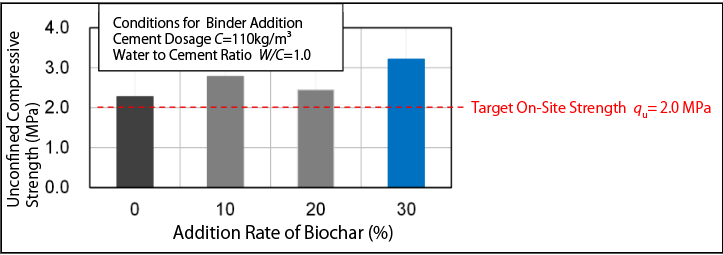 Fig. 3: Results of Strength Tests on Core Samples from
the Demonstration Experiments (28 day-curing age)